

Wine & Other Stories

Christiane Racine: discovering Wales wines and territory

Written by Veronica L.

Christiane Racine tells the wines of Wales, and the winemaking history of this magical wine region, with the passion of those who carry out this work and the scientific knowledge of a scholar. She is also a member of Welsh Vineyards Association, created in 2013, to promote the multiple interests of all its members to establish Great Britain as one of the world’s top quality wine regions

Christiane is the founder of Sticle Vineyard, a family-owned vineyard that was established in 2019 and is one of the largest vineyards in Wales, with 25 acres and 10,000 Sparkling wine vines of Chardonnay, Pinot Noir, and Pinot Meunier.

It is an organic/biodynamic vineyard (pending certification) that respects the environment and supports its local economy with employment.

Christiane Racine is a strong advocate of sustainable practices, the next phase of investment is planned for 2023-2024 for a Zero-Wine Estate that will house its businesses of organic Winery/Cellars/Distillery/Small Boutique Wine Hotel/Farm-to-fork Restaurant/Event facility.

In this interview, Christiane tells the story of a territory full of opportunities and potential that looks to the future in the name of sustainability.


©Ancre Hill Estates

Christiane, can you tell us about Wales and why it is a special land also for wines?

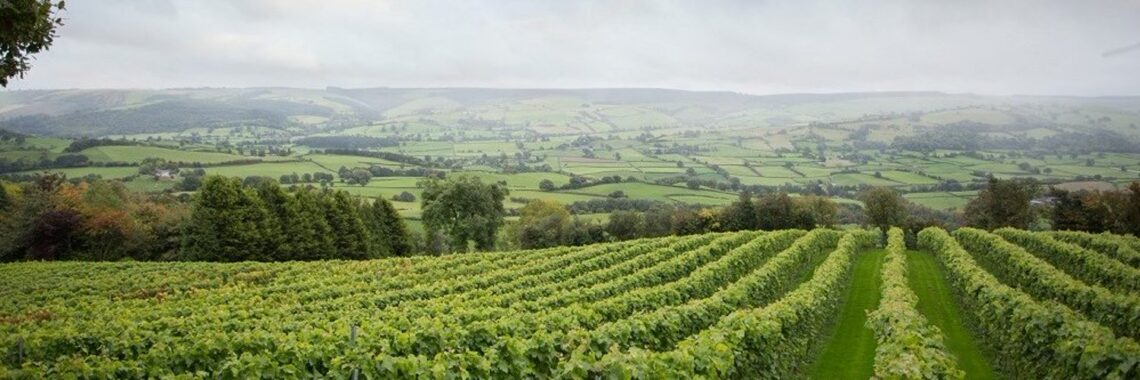
As you cross the border from England to Wales, a certain force of nature will grab you. Like Camelot and the tale of King Arthur, Merlin’s magic and the mighty red dragon are very much alive across its lush valleys of green which hide many treasures of its past and many new ones to be discovered. Nowhere else will you sense this call from the land which is mystical as its Celtic language.

©Parva Vineyard

Wales extends from North to South alongside its western coastline to the Irish Sea, and to its south the Bristol Channel with its warm currents from the Atlantic ocean. Wales benefits, generally from mild weather year round, but it does feature mesoclimate depending on location and altitude. Wale’s spectacular beaches, hidden coves and bays offer little gems and access to many of its offshore islands. One moment you can dream of relaxing under a parasol on a white sandy beach, and the next take in views where rocky bays are drowned in the seas.

©Velfrey Vineyard

Inland the Welsh undulating landscapes are magnificent, mountainous, and overwhelming and continue to grab one’s soul when at the top of its highest peak to the northwest with Snowdonia and its sister mountains all above 3,000 feet and to the southeast with its snow-capped Brecon Beacons and its glorious views to infinity. One can easily travel across Wales in a day but would miss along the way its rich history alongside its castles built to conquer and protect all those that have tried to gain access to its shores to gain power and a crown. King of Kings in the name of a Crown, Llywelyn the only true King of Wales and Henry Tudor, the Welsh King of England to be known as Henry VII, whose dynasty effectively created modern Britain.

©Blue Moon Vineyard

Centuries have passed but still today it is possible to own lands that have yet to be touched by men. The land is rich in fertile soil, some with subsoils of slate that carry the heat deep down to the vines’ root system after a warm sunny day which contributes to ripening the grapes.

History will tell of Suetonius Paulinus, a Roman governor who established a vineyard at Caerleon, east of what is now Cardiff near the Bristol Channel in AD75, and Abbeys were built along the western North coast of the Irish sea, producing wine until the Vikings invaded. History will also tell that vineyards and winemaking were never too far from those whose successful quest of invasion would have Welsh wine with their feasts.

©The Dell Vineyard

Fast forward to today, Wine Tourism caters to wine lovers dreaming of discovering delicious new wines that reflect the DNA of its terroir, mesoclimate, care of its vines, and finally that secret blend and ageing factors in winemaking that is ultimately the Wine Estate owner’s signature in bringing it all together for the pleasure of the nose and the development of aromas that hits the mouth. That feeling of satisfaction can only be elevated by marrying it all with those other flavours of local ingredients, and foods for that moment when one knows that something special just happened. At that moment, you just want to tell the world and share that ultimate experience. No wonder ‘Llanerch Vineyard Wine Hotel’ was crowned Best Restaurant and Hotel at the AA Hospitality Awards in 2022. Sitting on their terrace surrounded by impeccable rows of vines, one can get lost in one’s thoughts. That is food for the soul that continues on the wine trail across the Welsh lands to the next vineyard ready to offer their very best in hospitality and tasting of award-winning wines with platters of regional foods perfectly selected to elevate that special moment.

©Gwinllan Conwy Vineyard – Sheep Fleece in Vineyard

What are the viticultural peculiarities of such a generous territory?

Up and down and across the Welsh landscapes of postcard perfect picturesque green lands spotted by more puff balls of white sheep than its actual total population of people, winding roads lead to the discovery of exceptional Welsh vineyards telling their unique stories about their terroir, elevation, and their selection of grape varietals from those that grow well in Wales like Chardonnay, Pinot Noir, Pinot Meunier, Pinot Noir Precoce, Seyval Blanc, Divico, Huxelrebe, Albarino, Reichensteiner, Kernling, Triomph d’Alsace, Rondo, Madeleine Angevine, Cabernet Cortis, Ortega, Fruburgunder, Dornfelder, Solaris, Phoenix, Bacchus, Siegerrebe, and Regent until harvest is called dreaming of future blends of refreshing crisp wines or that full body creamy blend or those beautiful bubbles from its Sparklings.

All Welsh vineyards share that passion to produce that fine, balanced wine with notes that awaken one inner self. That is the magic of the land. To make the geography easier to understand, Wales is defined by 4 distinct wine regions and each one has its unique characteristics. The North West is home to 9 Vineyards: Gwinllan Cae Popdy, Gwinllan Conwy, Gwernaffield, Gwynfyd Mon, Llwynhudol Plas, Mawddach, Pant Du, Red Wharf Bay, Vale Gwinllan y Dyffryn. The South East is home to 11 Vineyards: The Sugar Loaf, White Castle, Ancre Hill Estates, Croffta, The Dell, Glyndwr, Llanerch, Meadow View, Parva Farm, Le Prevost, St Hilary. The Midwest is home to 5 Vineyards: Blue Moon, Penarth, Vyrnwy, Whinyard Rocks, Montgomery and West Wales is home to 8 Vineyards: Oaklea, Spring Hollow, Sticle, Velfrey, Gwinllan Hebron, Jabajak, Llaethliw, Llwyn Pur. For details on each of the Welsh Vineyards visit https://vineyards.wales/vineyards.


©Gwinllan Llaethliw Vineyard

What are the main vineyards and their characteristics?

The recipe to create a successful vineyard is hard work, determination, courage, and commitment.

The vineyard became part of the family that owns it. Nothing comes easy, because the diversity in topography, terroir, sub-terrain composition and diverse meso climatic systems are different for each of the vineyards and so they have to adapt and adopt viticulture techniques that satisfy those particular conditions for the best results.

©Pant Du Vineyard

They are not scared to innovate in the vineyard and in the winery to create that secret balance of taste that has awarded them recognition in English and Welsh Wine competitions and beyond to International recognition of highest honours.

Ancre Hill Estates was established in 2006 and is the largest certified Organic/Biodynamic Wine Estate in Wales. It is owned and operated by Richard and Joy Morris, whose passion is reflected across their Wine Estate. Their vineyard’s terroir of sandstone/mudstone with well-drained limestone soils is home to 30,000 vines of varietals of Pinot Noir, Chardonnay, Triomphe d’Alsace, Albarino and Pinot Meunier. Ancre Hill has been recognised with medals in some of the top international wine competitions in the world. Richard is a pioneer in our wine industry and has mastered best practices in the field of Organic and Biodynamic viticulture methods that are well-suited for the Welsh environment. His expertise continues in the winery which is his playground for experimenting and creating exceptional wines that continue to impress wine critics. He continues to excel in pushing those boundaries that innovate in the vineyard and the winery. His was the first vineyard in Wales to produce an exceptional Orange wine which is trendy, and you can be sure there are more surprising new wines being tested right now.

Another exceptional vineyard is White Castle Vineyard, established in 2008 by Robb and Nicola Merchant, also recognised with medals in some of the top international wine competitions in the world.

© Gwynfyd Mon Vineyard

Robb and Nicola are both passionate and dedicated to producing a variety of AWARD-WINNING spectacular Welsh Wines using first-class viticulture practices. Robb had to extend his vineyard in 2022 due to the growing demand for his wines in London restaurants.

Penarth Vineyard is another relevant vineyard that was established in 1999. The vineyard produces Sparkling and still white and rosé wines as well as brandy.

Great success continues with Parva Farm Vineyard, established in 1979 by Colin & Judith Dudley. This vineyard overlooking the historic Tintern Abbey, is the oldest, productive award-winning vineyard in Wales. Winner of a long list of medals in English & Welsh Wine Competitions.

©Hebron Vineyard

Another good example of innovation in the vineyard is from an award-winning vineyard in North Wales Gwinllan Conwy Vineyard, established in 2012 by Colin and Charlotte Bennett, whose passion to care for their vineyard organically has led them to team up with their sheep farmer friend. After a good laugh from thinking and then doing a very strange thing in the vineyard, Colin agreed to roll down the white sheep fleece provided by his friend under the vines and see what would happen with time. As predicted, the sheep fleece did keep weed growth down under the vines during the summer, reflected the sun off the white sheep fleece in late summer that helped ripen the fruits just in time for harvesting and then slowly decomposed during the winter, providing natural well-balanced nutrients to the soils that feed the vines. A long list of benefits for the vineyard across the seasons also helped the farmer sells his fleece. That innovation started with a laugh that continues today with visitors laughing because it looks like it snowed in the vineyard!

As the Welsh vineyards participated in English and Welsh blind wine-tasting competitions, their exceptional wines continued to speak for themselves in their categories of still Red, White, Rose, and Sparklings. Welsh producers that were awarded recognition and medals in 2022 included White Castle (Robb and Nicola Merchant), Gwinllan Conwy Vineyard (Colin and Charlotte Bennett), Vale Vineyard – Gwinllan y Dyffryn (Gwen & Rhys Davies), Parva Farm Vineyard (Colin & Judith Dudley), Velfrey Vineyard (Andy and Fiona Mounsey), Montgomery Vineyard (Woody Lennard), Jabajak Vineyard (Steven Moody), Great House Vineyard (Francesca Jones), Llaethliw Vineyard (Siw and Richard Evans), Llanerch Vineyard (Ryan Davies), Gwynfyd Mon Vineyard (Gavin and Elin Parry Jones) and The Dell Vineyard (Lucy and Dan Alford). More vineyards are to join the ranks of producers in a few years permitting their young vines to mature several years before their full production starts.

The Welsh vineyards are proud of each other’s successes and build on them to constantly try new things.

About the author

Veronica L.

PhD.
Writer, book author, essayist and magazine contributor, some of her works appear in the most popular International magazines.
Digital Content Manager and Communication Manager at "The Wolf Post", since the birth of the platform.

This site is protected by wp-copyrightpro.com