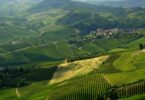



Spanning the geographical footprint of the prestigious Navarra Designation of Origin (D.O. Navarra), with which it formalized a vital collaboration agreement in 2018, the route weaves together entities from the Lower Mountain, Middle Zone, Tierra Estella, and La Ribera. The entire enterprise is expertly steered by a managing entity comprising TEDER (Rural Development of Tierra Estella) and the Middle Zone Development Consortium. Together, they invite travelers to step off the beaten tourist path and into a living museum of viticulture that has been nearly two millennia in the making.
Roots in Roman Soil and Medieval Monasteries
Viticulture in these lands dates back to Roman times. However, it was during the Middle Ages that the region’s wine culture truly flourished, largely propelled by monastic orders who recognized the spiritual and economic value of the vine.
Crucially, this vinous evolution was tied to the Camino de Santiago (Way of St. James). The French Way, one of the most famous and culturally significant pilgrimage routes in human history, cuts directly through Navarre. As pilgrims journeyed toward the shrine of St. James in Santiago de Compostela, they sought rest, nourishment, and local wine. The monasteries stepped in to meet this demand, cultivating vineyards and refining winemaking techniques along the pilgrimage corridors.
Generation after generation, the people of Navarre have nurtured this age-old heritage. The care, dedication, and respect for the land eventually earned the region formal recognition under the D.O. Navarra, protecting and promoting the unique identity of its wines on the global stage.

© Ph. Ruta del vino de Navarra
The Power of Convergence: Climate and Terroir
What sets Navarrese wines apart in a crowded global marketplace? While flavor profiles and cultivation methods play a role, the true secret weapon of Navarre lies in its astonishing climatic and landscape diversity.
Navarre boasts an exceptional circumstance that is practically unique across the entire Iberian Peninsula: the meeting point of three distinct climates. Here, the humid breezes of the Atlantic and the Cantabrian Sea brush against the continental chill of the interior, while the warmth of the Mediterranean and the Ebro Valley sweeps up from the south, all tempered by the towering presence of the Pyrenees.
Because of this meteorological crossroads, a traveler can witness grapevines thriving in southern Navarre within a nearly desert-like environment near the Bardenas Reales Natural Reserve. Just a short journey north, those same vines adapt to the alpine mountain climate of the Roncal Valley.
To manage and celebrate this variety, the D.O. Navarra is officially divided into five distinct wine-growing areas, each imparting its own fingerprint onto the fruit:
- Tierra Estella: Located in western Navarre, this area is dominated by the Tempranillo grape. It is also home to picturesque pockets like the Villa de Monjardín, where Chardonnay vineyards thrive alongside historic estates well-known to pilgrims on the Camino.
- Valdizarbe: Situated just north of the Ribera Alta, Valdizarbe is the smallest and wettest of the five zones, serving as a historic welcoming point for travelers on the Way of St. James.
- The Lower Mountain (Montaña Baja): Stretching across the eastern part of the region, this zone is heavily defined by the dominance of the Garnacha grape, particularly around the renowned wine town of San Martín de Unx.
- Ribera Alta: Covering nearly 5,000 hectares directly beneath Tierra Estella, the Lower Mountain, and Valdizarbe, this zone includes the famous city of Olite, a historic beacon of Navarrese wine culture.
- Ribera Baja: Occupying the southern tip of Navarre, this is a practically flat area sweeping across part of the Ebro Valley, featuring the driest climate of the five regions.

© Ph. Ruta del vino de Navarra
The Varieties: From Legendary Rosés to Bold Reserves
The grape varieties cultivated in Navarre reflect both a fierce dedication to local identity and a willingness to embrace global excellence.
For red wines, the primary native varieties are Tempranillo, Graciano, Garnacha, and Mazuelo. For whites, traditional local stars include Garnacha Blanca, Muscat Blanc à Petits Grains, Viura, and Malvasía. Over time, the region has also successfully integrated international varieties such as Pinot Noir, Cabernet Sauvignon, Merlot, Syrah, Chardonnay, and Sauvignon Blanc into its cellars.
Undoubtedly, the undisputed monarch of the vineyard here is Garnacha. Navarre is internationally renowned for its Garnacha reds and, above all, its legendary rosés. Historically, Navarrese rosé wines have set a high benchmark: they are exceptionally fruity, fresh on the palate, and visually striking. Traditionally crafted using the saignée (bleeding) method, a natural pressing technique that relies entirely on the weight of the grapes without mechanical intervention, these rosés capture the pure essence of the fruit.
For those eager to taste the absolute pinnacle of Garnacha, wine lore points directly to San Martín de Unx. This historic town, integrated into the Navarra Wine Route, hosts events like the annual Day of Rosé Wine, making it a mandatory pilgrimage for lovers of pink-hued pours.
Yet, to pigeonhole Navarre as merely a maker of fine rosés would be a disservice to its modern winemaking renaissance. Today’s Navarrese viticulture produces a brilliant spectrum: crisp, elegant Chardonnay whites; vibrant young reds; complex, structured aging and reserve reds; and seductively sweet white muscatels.

© Ph. Ruta del vino de Navarra
A Journey Through Patrimony and Hospitality
Touring the Navarra Wine Route is an immersive journey through time. The route acts as a bridge connecting the region’s ancient architectural treasures with its vibrant modern wine culture.
Because the territory has been shaped by centuries of travelers, the warmth of the local people is palpable. Visitors are greeted with the same hospitality that has welcomed pilgrims for over a millennium. Along or near the route, history enthusiasts can marvel at exceptional cultural monuments, including the Palace of the Kings of Navarre, the Church of the Holy Sepulcher, the striking octagonal Church of Santa María de Eunate, the imposing Javier Castle, the ancient Monastery of Leyre, and the magnificent Royal Palace of Olite.
To deepen the visitor experience, the Navarra Wine Route offers dynamic, educational activities that take wine lovers straight to the source. Interpretative viewpoints and well-marked walking paths wind directly through the vineyards, allowing the public to understand the delicate vine cycles and terroir up close in a simple, engaging manner.
Furthermore, a packed calendar of harvest celebrations and gastronomy festivals—such as the aforementioned festivities in San Martín de Unx—ensures that every season brings a new reason to visit. These events brilliantly fuse local gastronomy, folklore, history, tradition, and legend into unforgettable celebrations of community.

© Ph. Ruta del vino de Navarra
A Toast to Living History
The land of Navarre has evolved without ever severing its roots. Today, its wine culture stands as the living result of a 2,000-year journey—a harmonious blend of ancient respect for the earth and modern, forward-thinking viticulture.
For the traveler willing to venture beyond the ordinary, the Navarra Wine Route offers an invitation not just to taste exceptional wines, but to become part of an ongoing story written in soil, sun, and stone.