



Known for its pure air, clear skies, and endless silences, Patagonia has long captured the human imagination with its untouched wilderness. Today, however, that wilderness is speaking through a new medium: wine.
Driven by a combination of unique geographical conditions, climate, and the obsessive dedication of forward-thinking winemakers, the Patagonian winemaking industry is rapidly cementing its place on the international stage. Yet, despite producing world-class bottles, this story is still in its infancy. Through heavy investments, technological advances, and a bold vision, winemakers between the 39th and 42nd southern parallels are transforming a rugged frontier into one of the most exciting cold-climate wine regions in the world.
The Terroir: Nature’s Laboratory
Patagonia meets nearly every natural condition required for the cultivation of exceptional vineyards. The region’s climate is defined by a wide diurnal temperature range during the crucial ripening stage—warm days followed by cool, crisp nights. This extreme amplitude preserves natural acidity while allowing sugars to develop evenly.
Add to this the region’s rocky and alluvial soils, excellent phytosanitary conditions, remarkable natural luminosity, scarce rainfall, and low humidity, and you have a recipe for viticultural success. But perhaps the most defining character of Patagonian terroir is the wind.
Sweeping continuously from the Andes to the Atlantic, the winds carry the mysterious, earthy aromas of native bushes and wild berries. More practically, this constant breeze keeps the vines exceptionally dry and healthy, minimizing the need for chemical interventions.
These elements, paired with the meticulous care of local vintners, yield wines with a remarkable balance between sugar content and fruit acidity. White wines from the region boast a delicate, expressive varietal character, while reds offer intense colors, rich fruit aromas, and a delicious, lingering palate, each bottle stamped with an authentic and well-defined personality.
The Geography of Cool-Climate Production
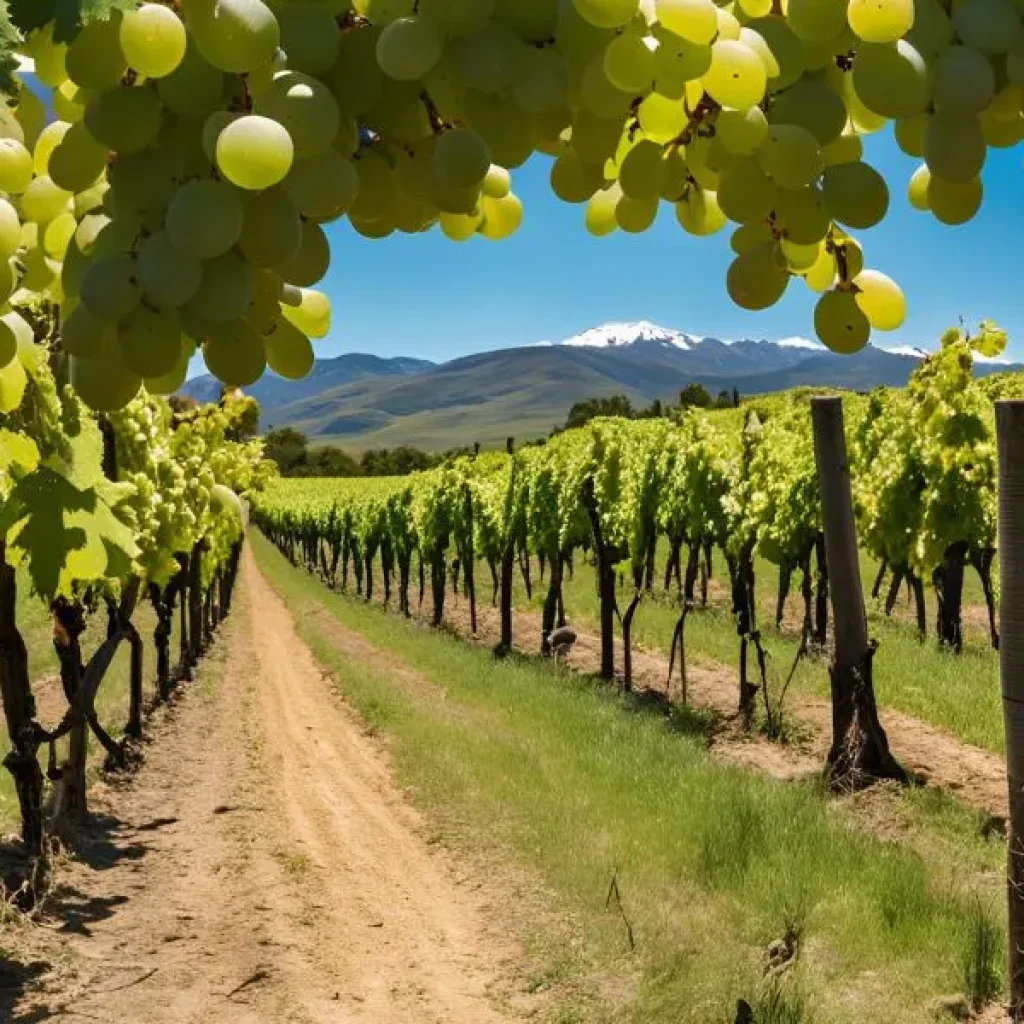
Mainly concentrated within the fertile valleys carved by the Negro and Colorado rivers, Patagonian viticulture is proudly defined as a “cold-area” production. Over recent decades, both white and red varietals have found an unexpected, thriving home in these southern latitudes.
Among the whites, producers have successfully cultivated varieties such as Torrontés (from regions like La Rioja and San Juan), Pedro Ximénez, Semillon, Sauvignon Blanc, and Chenin Blanc. Meanwhile, the red vines,Malbec, Merlot, Syrah, Pinot Noir, Cabernet Sauvignon, and Bonarda, have adapted with astonishing vigor, producing expressions distinct from their warmer northern counterparts.
To truly understand the breadth and depth of Patagonian and broader Argentine winemaking, one must look closely at the specific grape varieties shaping the market today.
The White Varieties: Elegance and Aromatic Intensity
Torrontés
Of doubtful origin,though widely believed to have roots in the Mediterranean and ties to the muscatels,Torrontés has found its definitive spiritual home in Argentina. Alongside Malbec, it has become an emblematic white varietal representing the country on the international market.
Torrontés is famous for its striking aromatic intensity, where notes of peach blend seamlessly with floral aromas like rose and jasmine. Its greatest virtue is the balance between voluptuous, shrouding notes and a pleasant, refreshing finish. While many examples taste delightfully sweet due to this fruit-acidity harmony, the wine is often dry. As wine aficionados note, Torrontés is not for the indecisive: you either love it or you don’t.
Pedro Ximénez
A vine traditionally associated with warm climates and the flavors of southern Spain, the legend of Pedro Ximénez stretches from the Canary Islands to the Rhine. By the 17th and 18th centuries, it was the preferred variety in Andalucía. Today, it remains an important white variety in Argentina, often spelled “Pedro Jiménez”, where it is skillfully used to craft wines reminiscent of traditional Spanish styles.
Sémillon
Sémillon shares a fascinating trait with Riesling: its susceptibility to Botrytis cinerea, or “noble rot.” Under specific conditions of heat and humidity, this beneficial fungus softens the grape skin, allowing the fruit to dehydrate and concentrate its sugars. This process is responsible for some of the most prestigious and expensive sweet wines in the world, such as France’s Sauternes.
Outside of France, Sémillon has achieved notable quality primarily in Australia and Argentina. While it occupies a respectable surface area in Argentine vineyards, only a few regions express its true potential—most notably the Uco Valley in Mendoza and the Alto Valle de Río Negro. Here, winemakers produce dry, complex Sémillons layered with distinctive, alluring honey notes.
Sauvignon Blanc
As the premier white grape of Bordeaux and the Loire Valley in France, Sauvignon Blanc has proven remarkably adaptable to diverse global terroirs. In Argentina, it has carved out a significant niche among fine white wines, steadily building a reputation with a very promising future.
Chenin Blanc
Also known as pineau de la Loire or pineau d’Anjou, Chenin Blanc is a versatile white grape capable of producing foamy, semi-dry, vigorous table wines, as well as superb, spirituous late-harvest wines with high sugar concentrations. Because it sprouts early, it is vulnerable to spring frosts, and insufficient sunlight can leave it with an uncomfortably high acidity. However, this same acidity grants the wine incredible longevity.
In its native Anjou, Chenin Blanc thrives on the chalky, gypseous slopes (touffeau) of the Loire basin. These soils impart distinct aromas reminiscent of apricot, lemon, acacia honey, and even subtle earthy notes—a profile that continually invites curiosity and rewards adventurous palates.
© Ph. Argentina Pura
The Red Varieties: Power, Structure, and Grace
Malbec
Originally from southwest France, Malbec has achieved legendary status in Argentinian soil, yielding exceptional wines that have captured the global imagination. Whether crafted as a light, young red with fresh, vibrant fruit aromas, or as a full-bodied, age-worthy wine bursting with cooked-berry notes, Malbec is grown across the country’s winemaking regions, reaching its pinnacle in Mendoza’s Luján de Cuyo and Maipú. As Argentina’s flagship variety, Malbec continues to drive massive international growth and secure the country a seat among the world’s elite winemaking nations.
Merlot
Another gift from southwest France and a foundational pillar of great Bordeaux blends, Merlot is cherished for its rapid evolution, fresh and fruity aromas, and elegant body. When blended with Cabernet Sauvignon in varying proportions, it acquires remarkable aging potential, rivaling the classic wines of Pomerol and Saint-Emilion. In Argentina, excellent Merlot varietals thrive in the Río Negro Province, ranging from young, fruit-forward expressions to complex bottles softened by delicate aging in oak.
Syrah
Hailing from France’s Rhône Valley, Syrah is the backbone of legendary blends like Hermitage, Châteauneuf-du-Pape, and Côte-Rôtie. It produces vigorous, solid wines rich in tannins and built for long-term cellaring, often improving significantly with time in wood and bottle. Its intense aromas recall dark berries, spices, and leather. Much like Malbec in Argentina, Syrah (or Shiraz) found a second home in Australia, but it also commands a very promising future in Argentina’s San Juan Province.
Pinot Noir
The undisputed king of Burgundy reds and one of the three permitted grapes for Champagne production, Pinot Noir is a notoriously finicky vine. Because its skin is exceptionally thin, it is fragile against certain diseases and refuses to adapt to warm climates. It must be cultivated exclusively in cool regions—making Patagonia’s Alto Valle de Río Negro an ideal sanctuary.
When fermented as a white wine (crushed immediately after harvest to prevent skin contact) or as a traditional red, Pinot Noir yields light-colored wines with exquisite floral and fruit aromas. On the palate, it offers unmatched elegance, a pleasant texture, and a shrouding, velvety body.
Cabernet Sauvignon
Historically synonymous with grand Bordeaux wines, Cabernet Sauvignon is arguably the most widely recognized red variety on earth. Its secret lies in an uncanny ability to adapt to diverse international winemaking regions without ever losing its core identity. Producing a wine rich in color and robust tannins, it serves as the ultimate blending partner for softer varieties like Merlot and Cabernet Franc, anchoring some of the world’s most enduring bottles.
The story of Patagonian wine is still being written. From the crisp, aromatic whites born of cold mountain winds to the rich, structured reds shaped by intense solar luminosity, this southern frontier is the beating heart of the future of South American winemaking.