
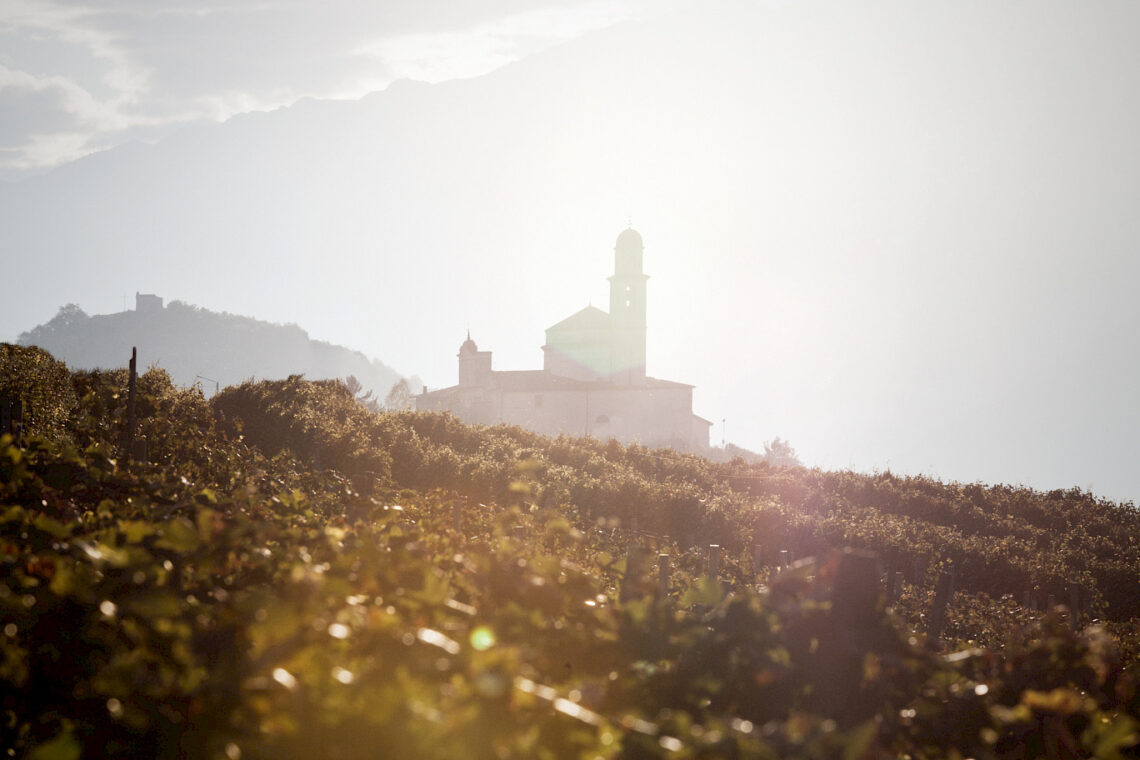

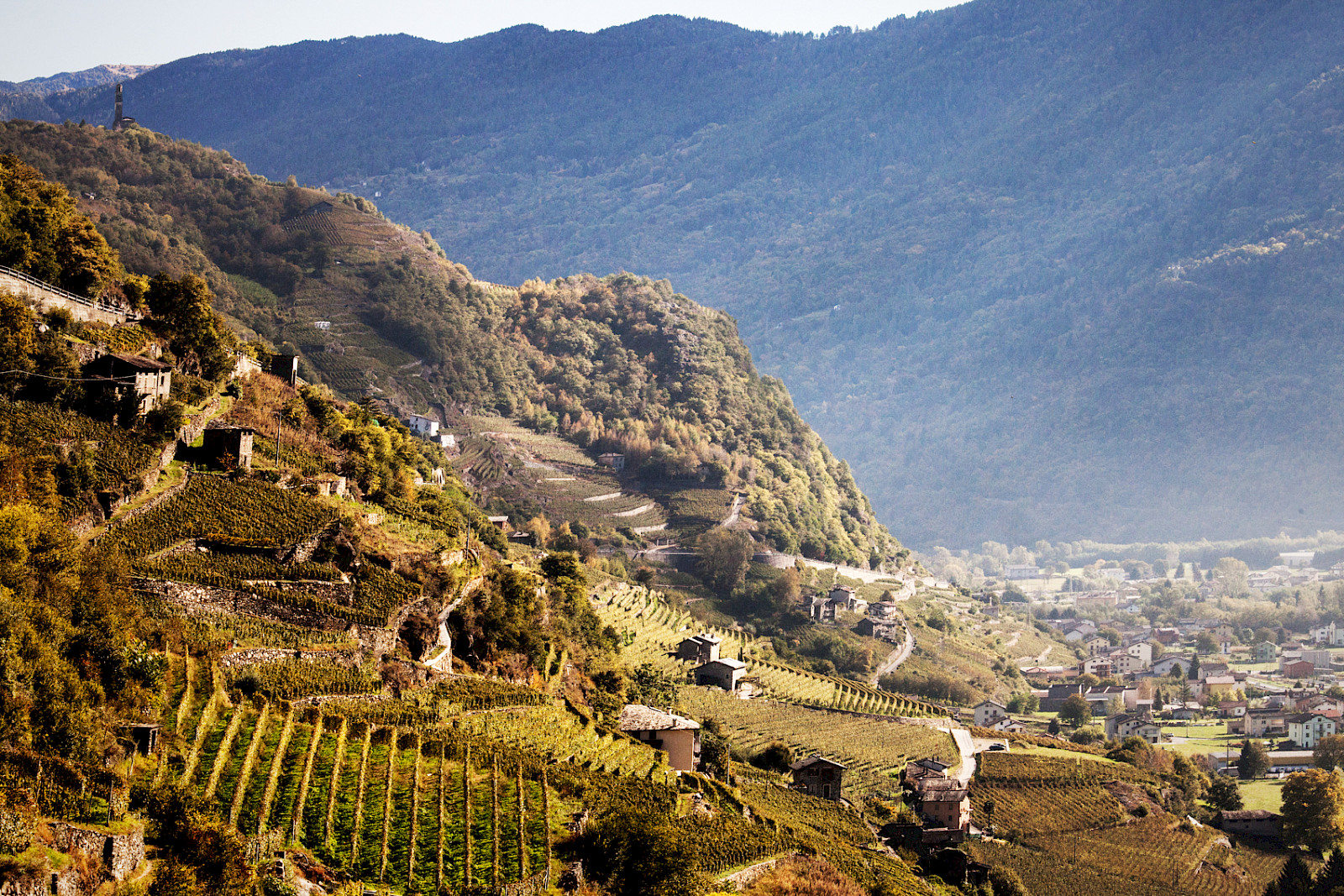
In the heart of Lombardy lies a viticultural landscape unlike any other on Earth. Valtellina is a place where gravity is challenged and geography is rewritten, not by tectonic force alone, but by the relentless, patient hands of generations of farmers. Here, 2,500 kilometers of dry-stone walls—a distance that could span the length of southern Europe—stitch the mountainside together, creating a vertical mosaic of vines that drink in the alpine sun.
This is the home of Nebbiolo, or as it is known locally, Chiavennasca. In Valtellina, this noble grape finds a unique, rugged expression, shaped by a complex interplay of mountain winds, the tempering breezes of nearby Lake Como, and a geological history written in gneiss and quartz. It is a land that is, quite literally, “in the right place at the right time,” producing wines that capture the very soul of the mountains: complex, graceful, and profoundly elegant.
© Ph. Vini di Valtellina
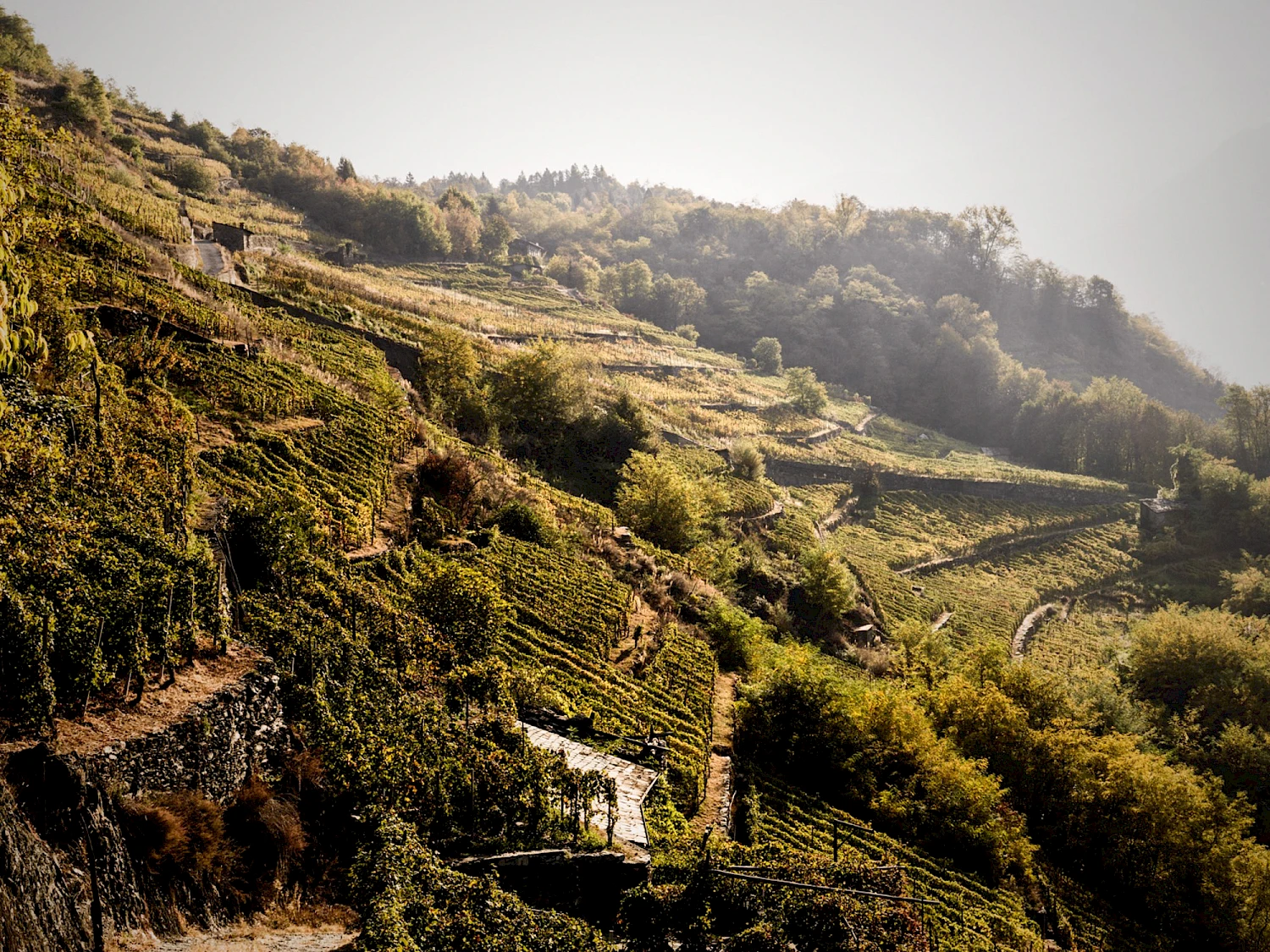
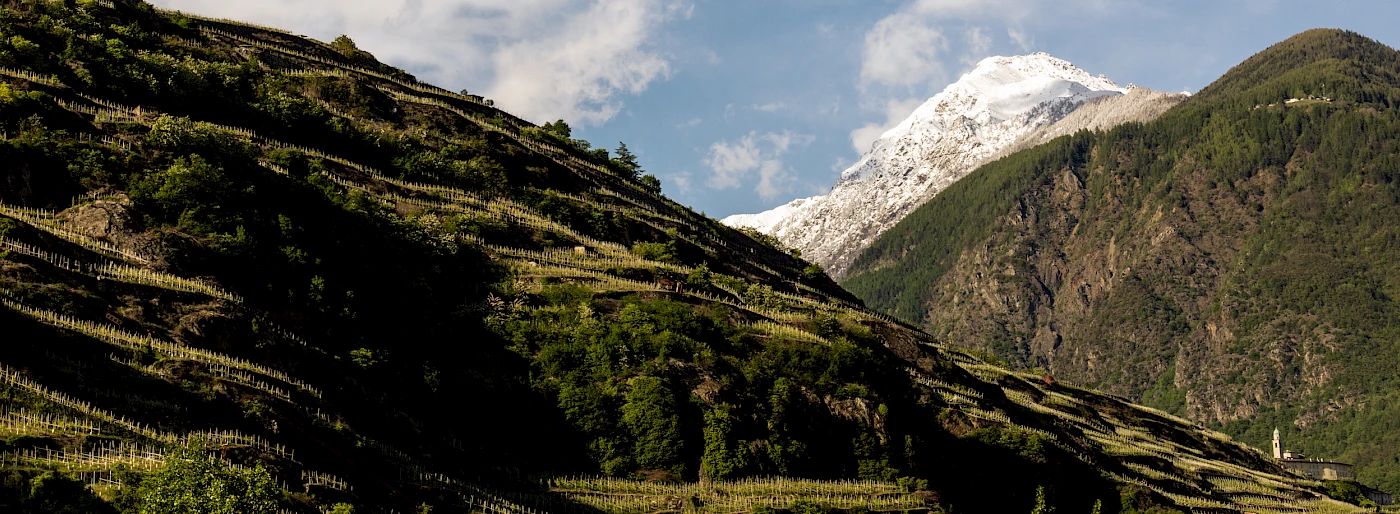
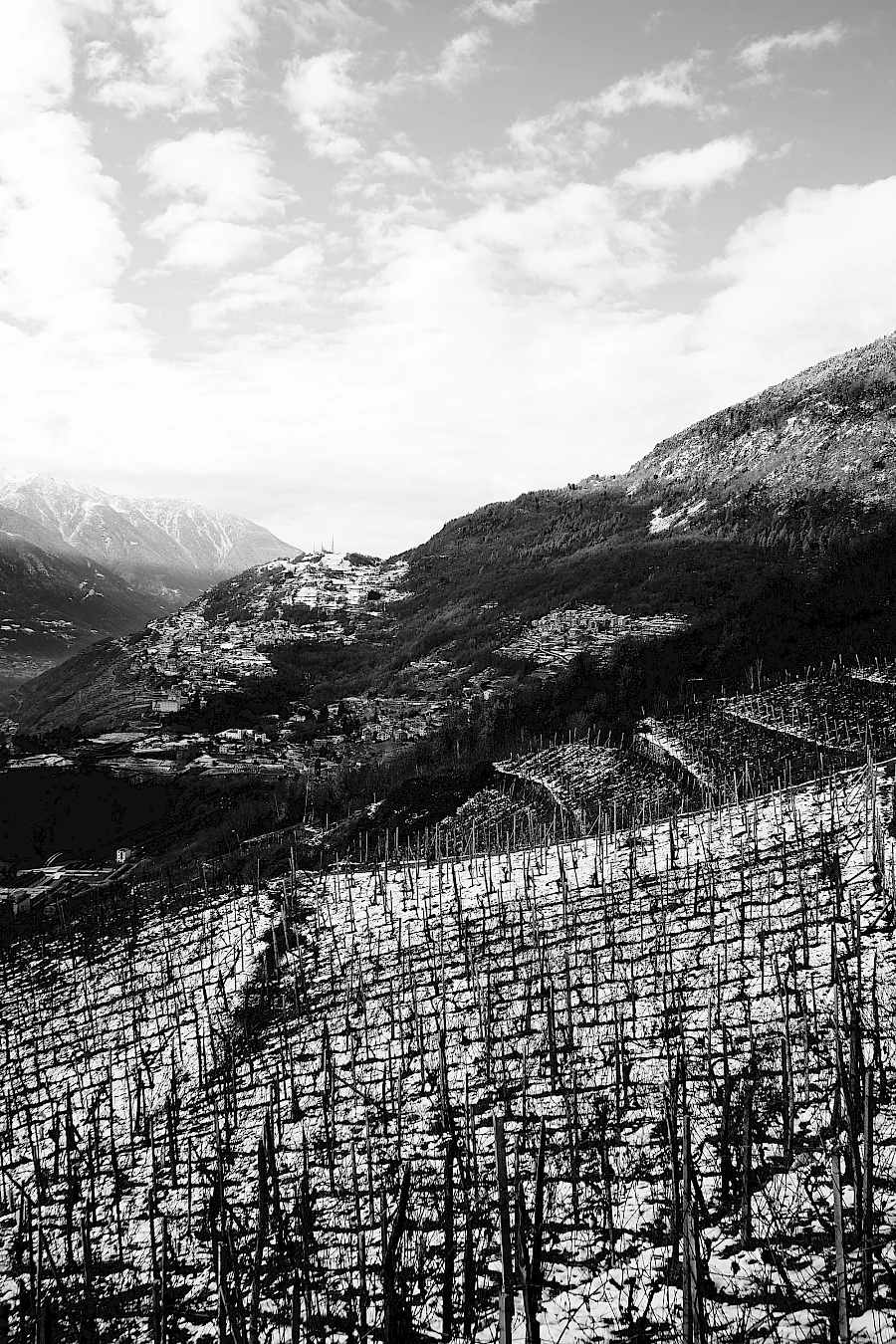
Valtellina is a long, narrow alpine valley carved by the Adda River and sheltered by the towering Rhaetian Alps to the north and the Orobic Prealps to the south. This orientation is the secret behind the region’s viticultural success. The vineyards are planted primarily on the southern-facing Rhaetian slopes, a privileged position that captures the intensity of the sun—up to 1,900 hours of sunlight annually.
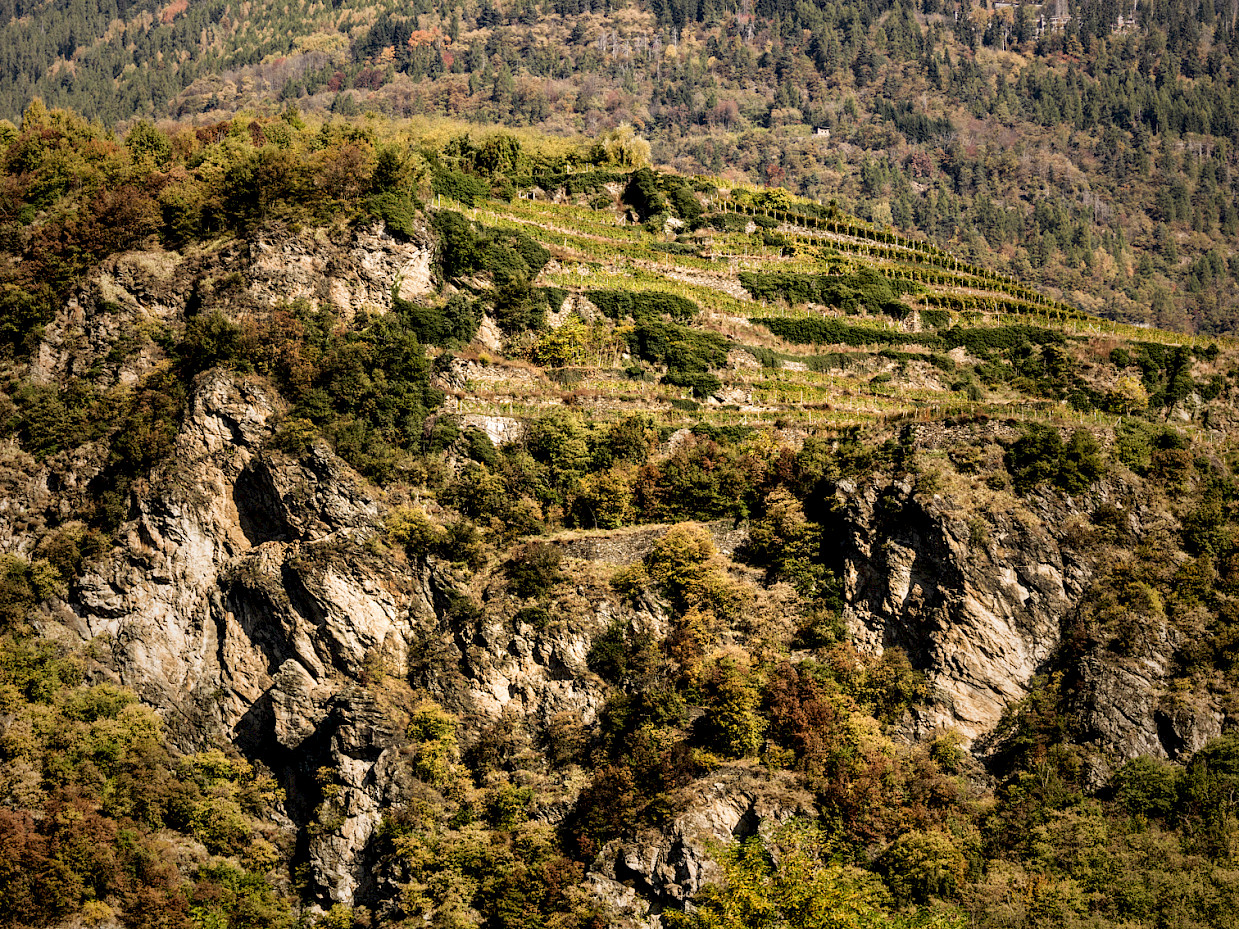
The cooling influence of the Breva, a local lake breeze rising from Lake Como, provides vital ventilation to the terraced slopes. This constant movement of air, combined with the high altitude and the thin, rocky soils, creates a perfect microclimate. The vines, rooted in soil that is often just a few centimeters deep, are forced to dig deep into the metamorphic rock, seeking nutrients and mineral complexity. This struggle is reflected in every glass; it is why Valtellina wine is rarely “simple.” It is a narrative of resistance and resilience.
© Ph. Vini di Valtellina
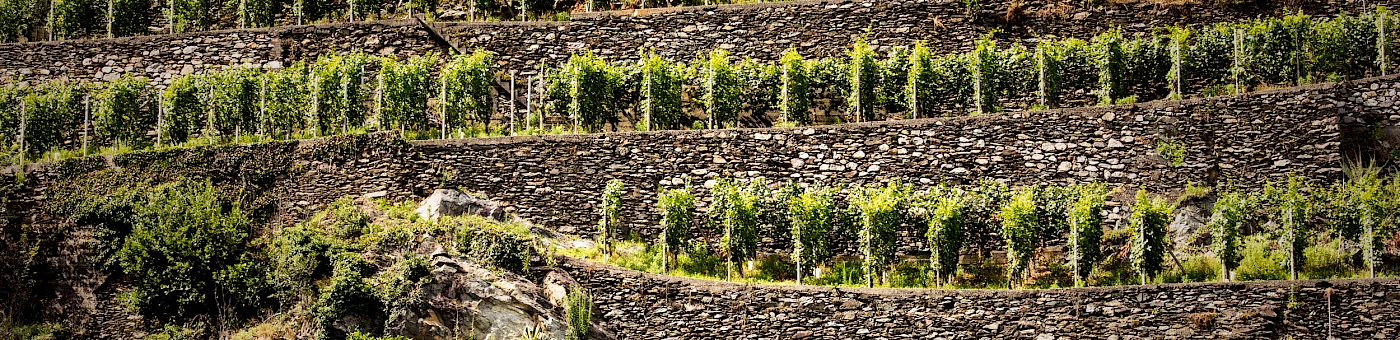
To walk through the vineyards of Valtellina is to walk through an architectural masterpiece. The 2,500 kilometers of dry-stone walls are more than mere retaining structures; they are the backbone of the region’s identity. Without these walls, the steep slopes would shed their soil, and the potential for viticulture would vanish.
The rocks support the terrace, and the vines support the rock—a symbiotic relationship that defines the soul of the Valtellina winemaker. It is a landscape that demands manual labor, as machines are largely rendered useless on these vertiginous gradients. This “heroic viticulture” is the foundation of the area’s sustainability, preserving a fragile ecosystem that has remained balanced for centuries.
© Ph. Vini di Valtellina
The local name for Nebbiolo, Chiavennasca, carries with it a sense of deep-seated heritage. Whether the name refers to the nearby Chiavenna Valley or an ancient dialectal term describing a vine of vigor and winemaking prowess, one thing is certain: it has been the heartbeat of these slopes since the 17th century.
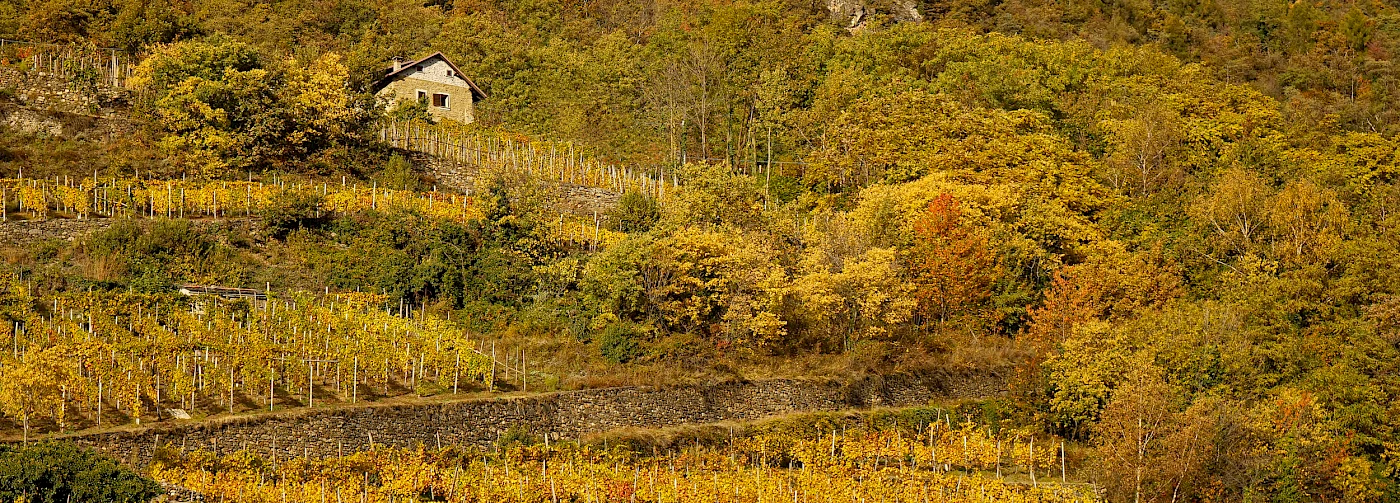
Following the ravages of the phylloxera epidemic in the late 19th century, the people of Valtellina doubled down on their commitment to this variety. They recognized that while Nebbiolo is a notoriously difficult grape, in the high-altitude environment of the Alps, it finds a unique finesse. The altitude maintains acidity, the cool nights preserve aromatics, and the rocky soil imparts a distinct mineral tension. The result is a wine with personality—a balance of austerity and elegance that is distinctly “Alpine.”
© Ph. Vini di Valtellina
Valtellina holds a prestigious distinction in the world of Italian enology: it is the only Italian region to boast two separate DOCG designations within the same production zone: Valtellina Superiore and Sforzato di Valtellina.
For those new to the region, Rosso di Valtellina is the perfect introduction. It is the freshest, most agile side of the territory,a wine designed for immediacy and enjoyment. Reflecting a “leaner” style of Nebbiolo, it is produced across the entire province, from Ardenno to Tirano. With at least six months of aging, it captures the liveliness of the grape while remaining a serious, high-quality expression of the terroir.
© Ph. Vini di Valtellina
When one moves to the best-exposed vineyards between Buglio in Monte and Tirano, one enters the realm of Valtellina Superiore. This designation is anchored by five historic subzones: Maroggia, Sassella, Grumello, Inferno, and Valgella.
Each subzone offers a slightly different interpretation of the land, yet all share a refined structure. With a minimum of 24 months of aging—at least one year in wood—these wines are complex, austere, and deeply nuanced. For those seeking the pinnacle of longevity, the Riserva version, aged for at least 36 months, offers a profound depth that rewards time in the cellar.
© Ph. Vini di Valtellina
Sforzato (or Sfursat) is the crown jewel of the valley. Recognised as the first dry red passito DOCG in Italy in 2003, it is a testament to the synthesis of “terroir and technique.” The process begins with the careful selection of the best Nebbiolo bunches, which are then left to dry, concentrating sugars, flavors, and aromas.
Sforzato is a wine of patience and knowledge. It represents a bridge between history and modern innovation, as producers continue to study the drying process to ensure the final wine is elegant rather than simply powerful. It is a bastion of value, embodying the passion of those who craft it and the sophistication of those who seek it out.
Beyond the two DOCGs, the Alpi Retiche IGT provides a canvas for creative expression, covering red, white, rosé, sparkling, and dessert wines. This flexibility allows producers to experiment, ensuring that Valtellina remains at the forefront of research and sustainability.
Today, the region is not just a custodian of the past; it is a forward-thinking winemaking community. Research into sustainable viticulture and climate adaptation is ongoing, ensuring that the fragile beauty of the terraced hills remains protected for future generations.
© Ph. Vini di Valtellina
Valtellina is a testament to the power of human intention. The harmony found in a glass of Valtellina wine—the signature finesse, the aromatic distinctiveness, and the complex mineral backbone—is a direct result of the harmony between the people and the mountain.
When you uncork a bottle of Valtellina Nebbiolo, you are not just drinking a wine; you are engaging with a landscape. You are tasting the 1,900 hours of sun that hit the Rhaetian slopes, the cooling draft of the Breva wind, and the tireless labor of the farmers who tend the 2,500 kilometers of stone. It is a wine that connects the drinker to the soil, the history, and the rugged, breathtaking beauty of the Alps. It is, in every sense, a wine in the right place, at the right time.