

Framed by the rugged Chianti Mountains on the east and the sweeping valleys of the Pesa and Elsa rivers to the west, this legendary territory is traversed by the historic Superhighway of the Palio.
This is Chianti, or Hianti in its ancient linguistic roots, an undulating land of vine and olive that has been cultivated for centuries. More than just a geographical region, Chianti is a living museum of agriculture, art, and architecture.
A Landscape Forged by History
The story of Chianti is as rich and layered as the soil from which its vines and olive trees draw nourishment. Long before the region became synonymous with fine wine and golden oil, it was civilized in remote antiquity by the Etruscans. Archaeological records reveal that these ancient people left indelible traces of their activity in the region’s early viticulture, laying the groundwork for a tradition that would span millennia. Following the Etruscans, the Romans stamped their organizational genius onto the landscape, building roads and expanding agricultural output.
However, the dramatic architecture that punctuates the modern Chianti landscape, the austere stone castles, perched fortresses, quiet monasteries, and fortified hilltop villages, mostly traces its origins to the tumultuous Middle Ages. During this period, the fierce rivalry between the city-states of Florence and Siena turned the region into a heavily contested borderland.
As centuries passed and times grew more tranquil, many of these martial fortresses and medieval strongholds were decommissioned and transformed into elegant villas and sprawling country residences. It was during these more peaceful eras that laborers carved systematic clearings into the vast, dense forests of ancient chestnuts and oaks. Where wild woodlands once reigned supreme, neat rows of vines and olive groves were planted, progressively assuming major economic importance and establishing an international reputation that endures to this day.
Historical records cement the region’s enduring legacy. The very first notarial document in which the name “Chianti” appeared in explicit reference to the wine produced in the zone dates back to 1398. By the 17th century, the region’s wines had found a receptive market across the English Channel, with exports to England becoming increasingly frequent.
The landscape underwent another profound transformation during the agrarian revival in Tuscany in the early 18th century. This era saw the rise of the sharecropper (mezzadria) system, which came to dominate Chianti and fundamentally altered how rural work was organized. Many of the picturesque stone farmhouses, as well as the physical layout of the agricultural properties that survive to this day, date back to this pivotal period. From the end of the 19th century through the threshold of the third millennium, Chianti Classico wine and oil have steadily reinforced their positions in the affections of connoisseurs worldwide, ensuring the long-term prosperity and cultural well-being of the region.
© Ph. Olio DOP Chianti Classico
The Geography and Boundaries of Chianti Classico
Today, the Chianti Classico territory spans an impressive 71,800 hectares (approximately 177,500 acres). Its administrative capitals are Siena and Florence, and the zone is shared between the provinces of these two historic municipalities.
The heartland of the denomination includes the entire territories of four distinct municipalities:
- Castellina in Chianti
- Gaiole in Chianti
- Greve in Chianti
- Radda in Chianti
Additionally, the designated Chianti Classico zone encompasses portions of Barberino Tavarnelle, Castelnuovo Berardenga, Poggibonsi, and San Casciano Val di Pesa.
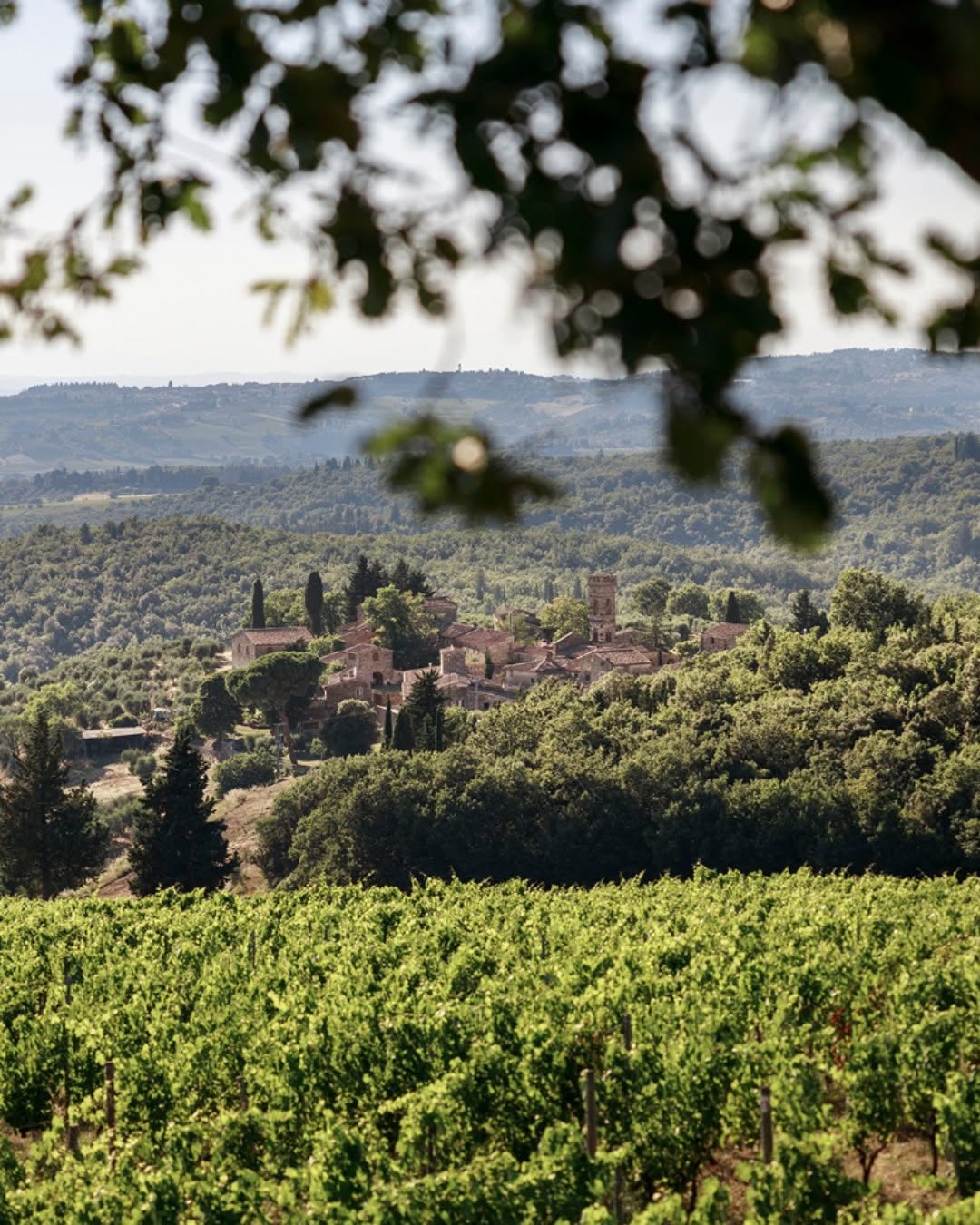
Geographically, the region is a dramatic study in contrasts. Two-thirds of the entire territory remains heavily wooded. Oak forests blanket nearly everywhere, while ancient chestnut woods are predominantly concentrated in the eastern portions of the territory. Conifers tend to cluster on the higher elevations, and charming pine groves dot the low hills situated just south of Florence.
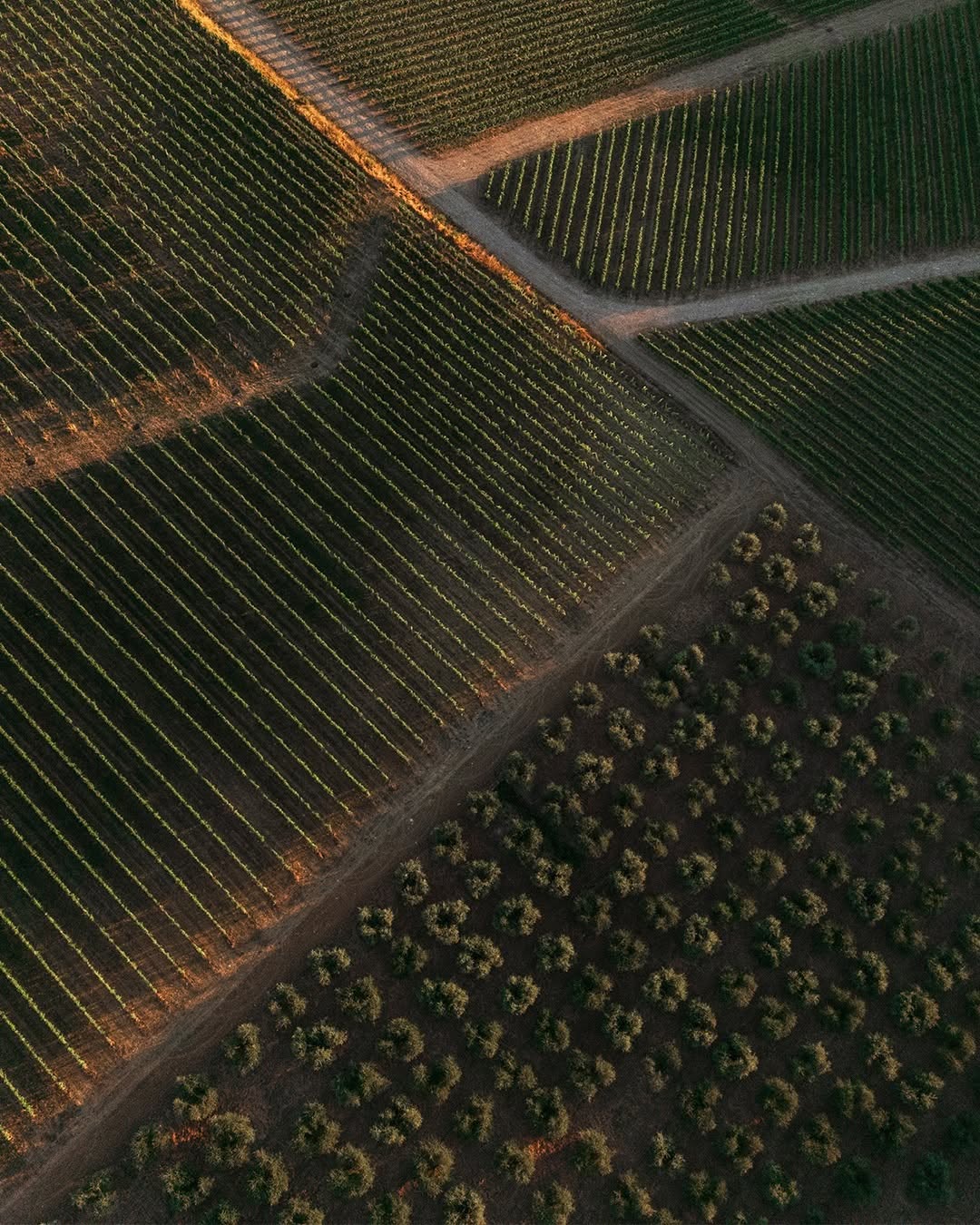
Interspersed among these densely wooded areas are patches of agricultural cultivation. The region’s climate, diverse soil compositions, and varying altitudes make the Chianti territory uniquely ideal for the production of both high-quality wine and world-class olive oil. Indeed, the signature visual motif of the Chianti landscape is the orderly, rhythmic alternation of neat rows of grapevines and silver-green olive orchards tracing the contours of the hills.
© Ph. Olio DOP Chianti Classico
Climate and Terroir: The Elements of Excellence
The climate of Chianti is distinctly continental, characterized by relatively cold winters where temperatures frequently drop below 4 to 5°C (39–41°F). In sharp contrast, the region experiences unusually hot and dry summers, with daytime temperatures frequently climbing above 35°C (95°F).
One of the most critical factors in the development of Chianti’s agricultural products is the dramatic diurnal temperature variation. Temperatures can change substantially during the span of a single day, driven in part by the region’s diverse topography. Altitudes range from a modest 250 meters (820 feet) above sea level up to 600 meters, with some peaks in the Chianti Mountains exceeding 800 meters.
Annual rainfall averages between 700 and 800 millimeters, with precipitation falling primarily during the late autumn and spring months. This specific hydrological and thermal rhythm provides just enough moisture for the deep-rooted vines and drought-hardy olive trees to thrive without suffering from excessive waterlogging.
© Ph. Olio DOP Chianti Classico
Liquid Gold: The Distinctive Chianti Classico DOP Olive Oil
While Chianti Classico wine often commands the global spotlight, the region’s extra-virgin olive oil is an agricultural treasure of equal distinction.
The journey of Chianti Classico olive oil begins in a territory that is notoriously challenging for olive cultivation. The harsh winter cold snaps and the blistering, dry summer heat create a rigorous environment. Because of these demanding climatic pressures, the olives in Chianti never completely reach full, soft ripeness in the way they might in milder southern Italian climates.
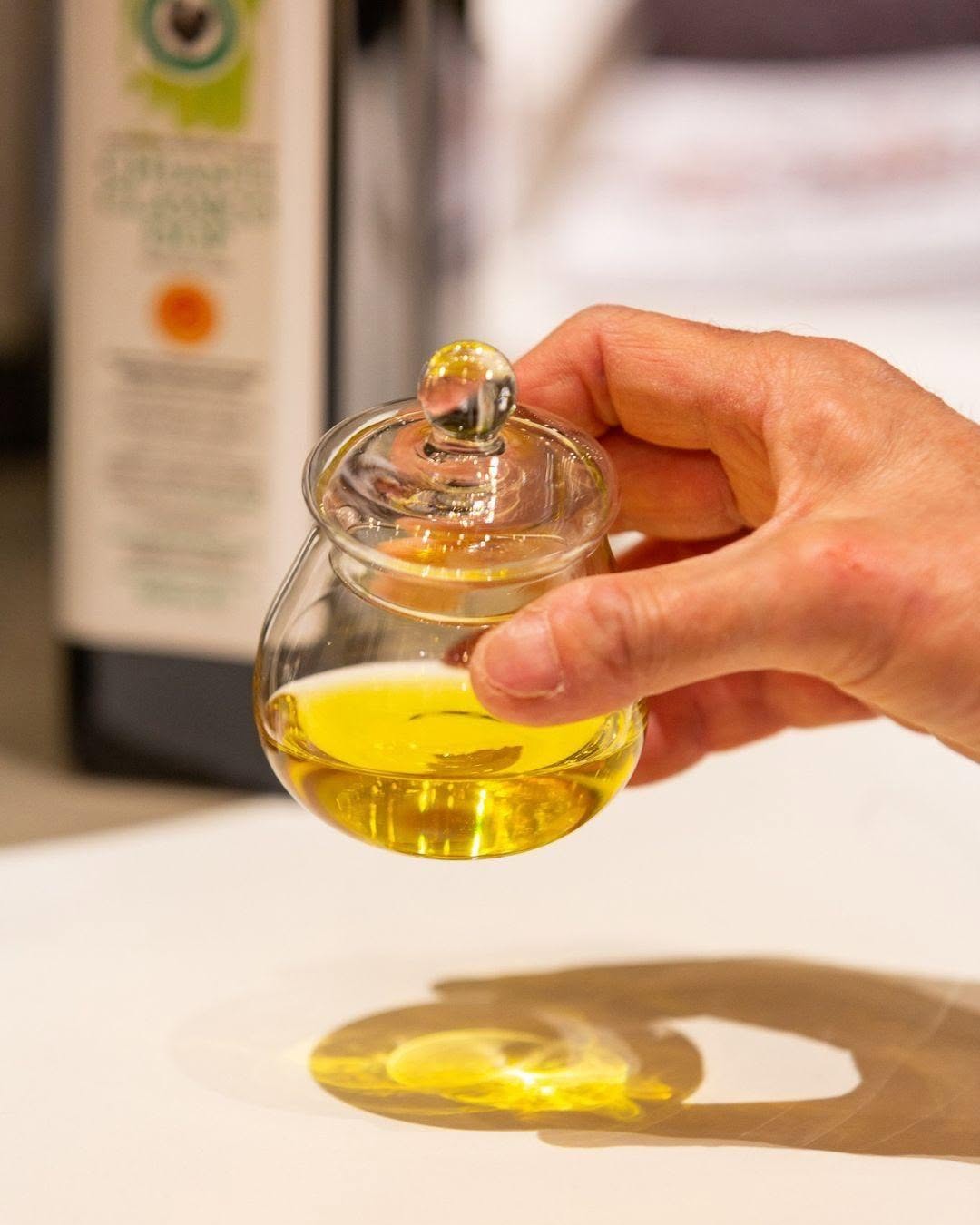
This very “toughness” of the terroir, however, is the secret to the oil’s extraordinary profile. The resulting olive oil possesses a remarkably intense, herbaceous aroma marked by distinct notes of fresh grass, raw olive, and subtle undertones of artichoke.
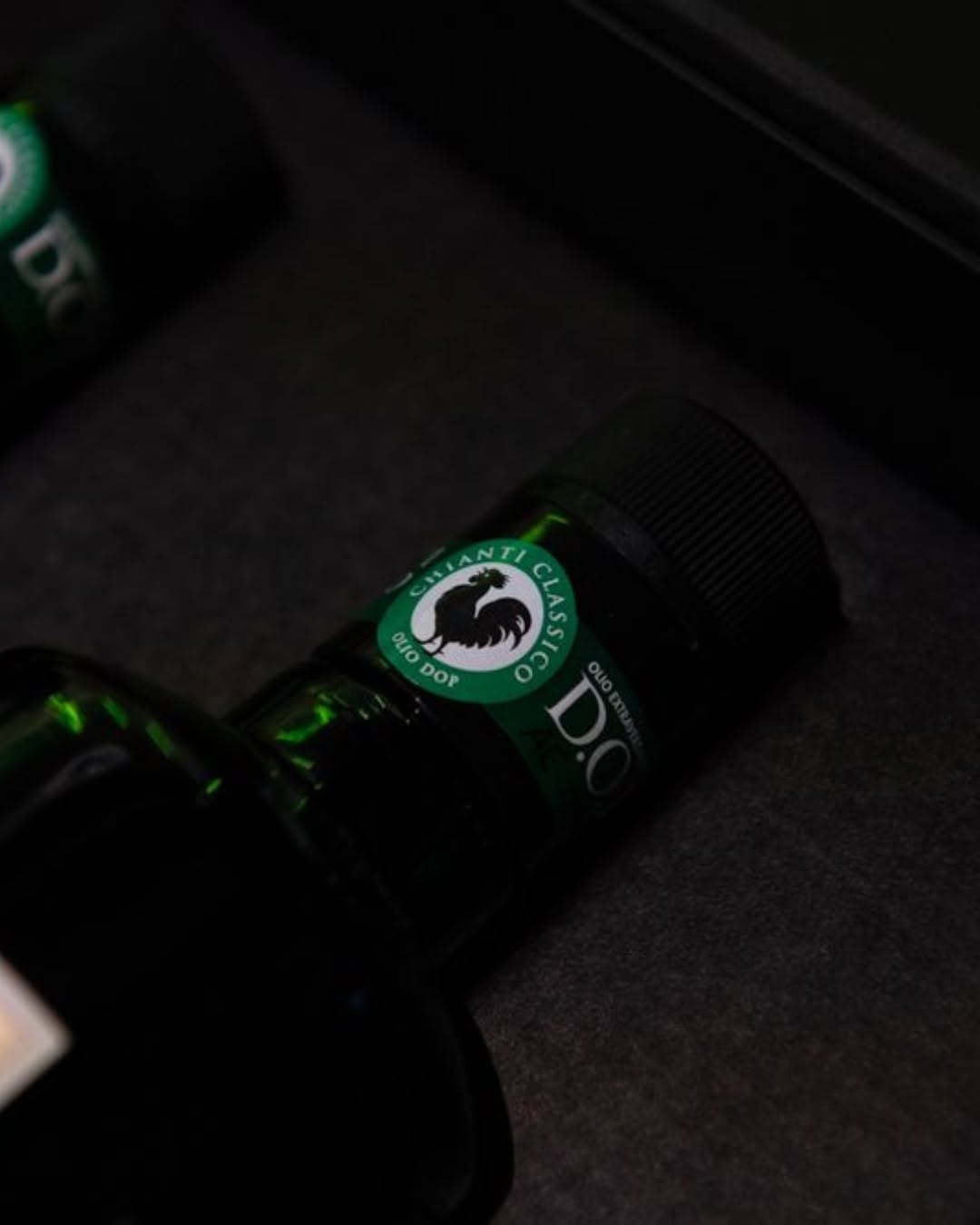
To protect this exceptional quality, strict regulations govern every drop produced in the region. Every single time Chianti Classico DOP (Protected Designation of Origin) olive oil is bottled, the producer is legally obligated to submit samples for rigorous chemical and organoleptic (sensory) testing. These tests establish whether the oil strictly adheres to the high standards set down in regional production regulations.
From a chemical standpoint, a certified DOP oil must meet specific parameters within much tighter, superior limits than those required for standard extra-virgin olive oils.
The institutionalization of these rigorous standards has deep roots. The very first consortium for extra-virgin olive oil was founded in the Chianti Classico territory back in 1975 as a voluntary organization. Forward-thinking producers came together to set stringent production regulations designed to obtain an ever-finer, more typical product that faithfully expressed the land.
Decades later, in the year 2000, the exceptional oil harvested from these storied hills gained formal Europe-wide recognition in the form of DOP certification. This designation cemented the unbreakable bond between the oil’s unique chemical and organoleptic characteristics and its specific territory of origin.
© Ph. Olio DOP Chianti Classico
Chianti has successfully bridged the gap between its feudal past and the hyper-modern global marketplace. By fiercely guarding the integrity of its terroir, from the mineral-rich soils and microclimates that nurture its grapes to the rigorous DOP testing that safeguards its emerald-green oil, the region ensures that the legacy of the Etruscans, the medieval guilds, and the Renaissance farmers continues to live, breathe, and taste as vibrant as it did centuries ago.