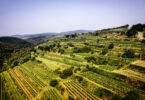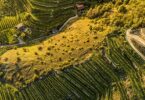

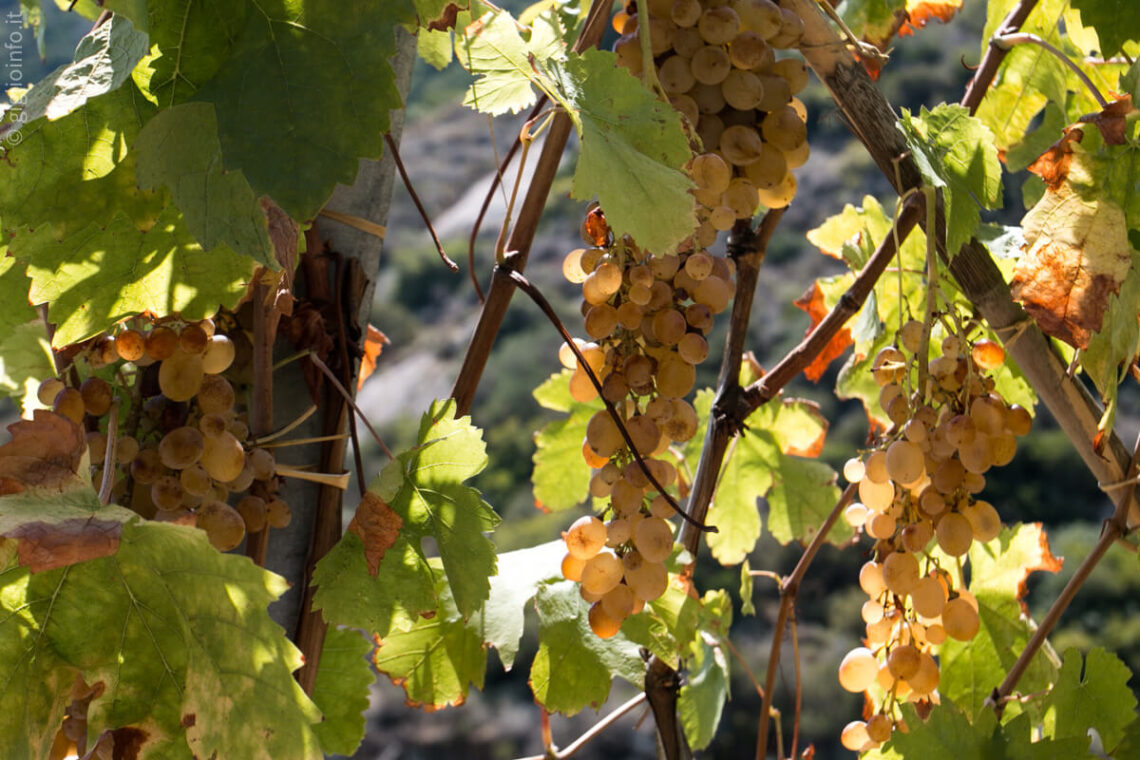

Standing on the precipitous cliffs of the Isola del Giglio, looking out over the expanse of the Tyrrhenian Sea, one is struck by a silence broken only by the crash of waves far below and the whisper of the coastal wind. Carved into these sheer, dramatic drops are the greppe-narrow, ancient terraces held together by dry-stone walls that have defined the landscape since antiquity.
Here, suspended between the salt spray and the sky, viticulture is not merely an agricultural pursuit; it is an act of sheer perseverance. This is the home of Ansonaco, a golden, potent white wine that carries the very soul of this Tuscan island in every drop. Celebrated by poets and historians, nearly lost to the tides of modern tourism, and now undergoing a passionate renaissance, Ansonaco is quietly re-emerging as one of Italy’s most captivating and exclusive wine treasures.
Roots Deep in History and Myth
The winemaking tradition on Isola del Giglio runs as deep as its granite foundations. While the exact origins are lost to the mists of time, it is generally believed that the principal grape-traditionally known on the island as Ansonaco, and identical to the Ansonica variety-arrived via ancient Greek traders. From its initial landing points in Sicily (where it is known as Inzolia), the vine eventually found its way to the Tuscan coast and onto the steep slopes of Giglio.
The wine’s storied reputation is well-documented. Centuries ago, its distinct character caught the attention of some of Italy’s most illustrious historical figures. The great Renaissance poet Francesco Petrarca praised its virtues, while the historian Paolo Giovio wrote admiringly of the island’s viticultural bounty as far back as 1552. For generations, the wine was a cornerstone of Giglio’s economy, supporting a thriving export trade that carried the island’s liquid gold to the mainland and beyond.
At the heart of this tradition is the Ansonaco grape itself, which makes up at least 90 percent of the blend. It is traditionally combined with small amounts (around 10 percent) of complementary indigenous and historic varieties, including Biancone, Moscatello, Malvasia, and Procanico. Grown in sandy, acidic soils derived from weathered granite, these vines yield a remarkably concentrated fruit that translates into a wine of striking personality: deep gold in color, remarkably structured, warm, and enveloping.
The Rise, Fall, and Near-Extinction of Giglio’s Vineyards
Despite its illustrious past, the agricultural landscape of Isola del Giglio underwent a dramatic upheaval in the mid-20th century. For centuries, farming the greppe was a way of life for the island’s inhabitants, who cultivated not only vines but also almond and peach trees, as well as essential vegetables, on the precarious terraces.
However, the arrival of the tourism boom in the 1950s fundamentally altered the island’s socio-economic fabric. Enticed by the promise of more reliable and less grueling livelihoods in the burgeoning hospitality and service sectors, younger generations abandoned the backbreaking labor of agriculture. The terraced hillsides, once meticulously tended, were slowly swallowed by the encroaching Mediterranean scrub. The sprawling vineyards fell into disuse, crumbling under the weight of time and neglect.
For decades, the ancient art of Giglio winemaking survived only through the stubborn dedication of a handful of elderly farmers. These traditionalists continued to tend small, personal plots entirely for their own consumption, keeping the flickering flame of Ansonaco alive while the rest of the world-and much of Italy-forgot it ever existed.
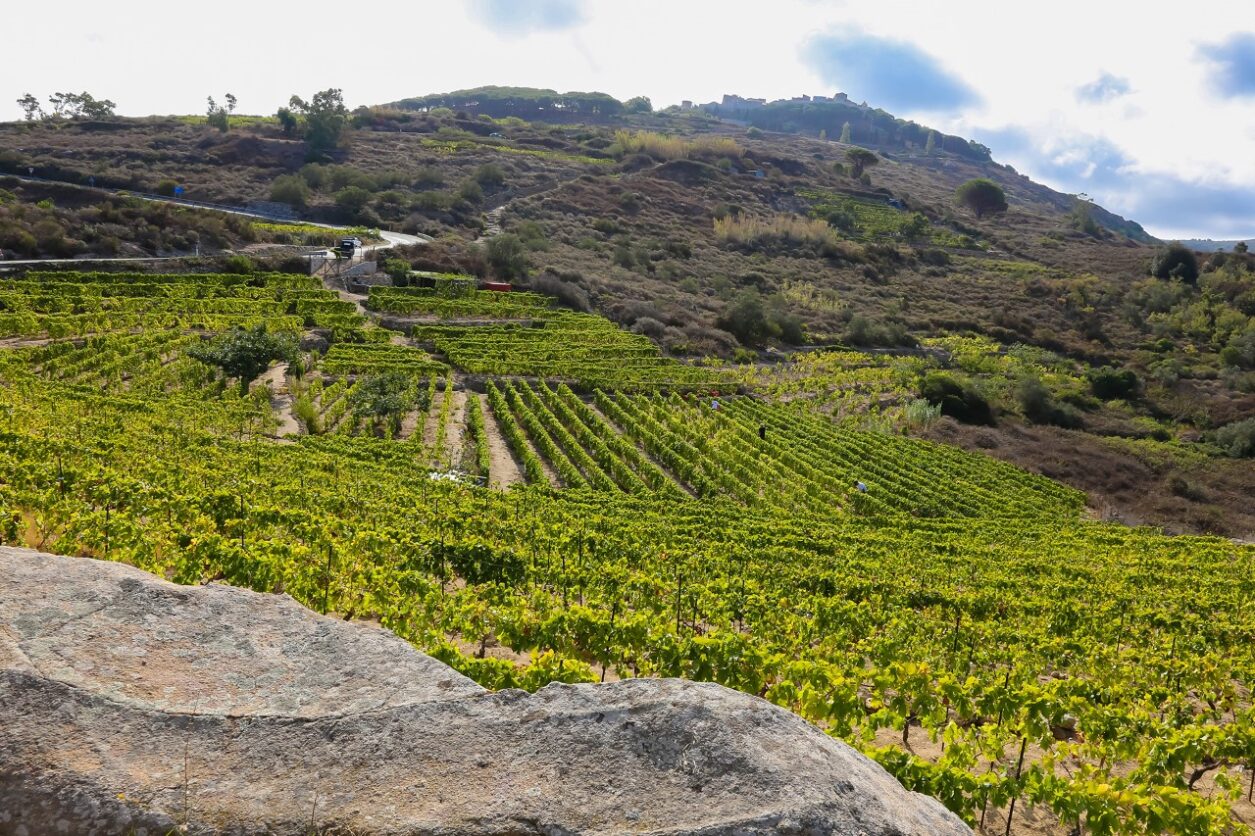
© Ph. La-Fontuccia
A Spark of Revival: The Return to the Land
The turning point came in 1999, exactly fifty years after the mass exodus from the fields began. The winery Altura launched an ambitious and daring project to restore a large, abandoned vineyard on the island. Rather than simply making wine for local consumption, Altura began producing it in more significant quantities, professionally bottling it, and affixing labels that proudly bore the name of Giglio.
This pioneering effort proved to be the catalyst for a broader revival. Inspired by Altura’s success, other local visionaries began rolling up their sleeves. They cleared the choked brush, rebuilt the collapsing dry-stone walls of the greppe, and restored further vineyards to their former glory, establishing new brands dedicated exclusively to Ansonaco.
The momentum accelerated further in the mid-2010s, when the unique terroir of Isola del Giglio began to catch the eye of prestigious mainland Tuscan wineries. Recognizing the extraordinary potential of the island’s grapes, these external producers partnered with locals to create innovative new blends. Today, what was once a dying craft practiced by a solitary few has blossomed into a vibrant community of eight active wineries.
The Definition of “Heroic” Viticulture
To understand why Ansonaco is so rare and precious, one must understand the immense physical challenge required to make it. Viticulture on Isola del Giglio is the textbook definition of “heroic viticulture”, a term reserved for wine production in regions where environmental conditions and extreme topography make farming an exceptional challenge.
The island of Giglio (part of the province of Grosseto and encompassing the nearby, smaller island of Giannutri to form a dispersed municipality of roughly 1,500 residents) is characterized by a dramatic landscape with an average elevation of 496 meters. The terraced plots are so narrow, steep, and perched so high above the sea that mechanical equipment-tractors, plows, and automated harvesters-cannot possibly reach them.
Consequently, every single phase of the agricultural cycle must be performed entirely by hand. Tending the vines, pruning, managing the canopy, and ultimately carrying out the grueling harvest are tasks executed with muscle, sweat, and traditional tools. Baskets of harvested grapes are often hauled up steep stone staircases or transported via small, monorail track systems jerry-rigged onto the cliffs.
Furthermore, because of the island’s strictly limited geographical area and the impossibility of expanding the cultivable surface of the narrow terraces, the production of Ansonaco can never be scaled up. It is a finite, unreplicable luxury of nature-a wine whose supply is strictly capped by the physical boundaries of the island itself.
A Tasting Experience Like No Other
For those fortunate enough to secure a bottle, tasting Ansonaco is a sensory journey across the Tuscan archipelago. Deep golden-yellow in color, the wine immediately announces itself in the glass with an intensely complex aromatic profile. Notes of ripe Mediterranean fruit-such as apricot and yellow peach-blend seamlessly with the herbal freshness of wild Mediterranean scrub (macchia mediterranea), subtle hints of white pepper, and a distinctive, vibrant touch of blood orange.
On the palate, it is far from a delicate, fleeting white wine. Ansonaco is structured, warm, and enveloping, with a pronounced minerality imparted by the granite-sandy soils and a lingering, refreshing citrus finish. These unique qualities have made it a highly sought-after gem among sommeliers, wine collectors, and enthusiasts looking for authenticity far away from industrial winemaking.
Gastronomically, Ansonaco is as versatile as it is flavorful. Its structure and complexity make it an exceptional pairing for rich vegetable-based first courses, poultry dishes like chicken or rabbit, and a wide variety of aged and semi-aged cheeses.
For travelers and wine lovers eager to experience this liquid history firsthand, Isola del Giglio offers a warm, intimate welcome. Visitors can journey up to Giglio Castello-the medieval fortified village perched high on the island’s spine,where several local wineries operate tasting rooms and shops. Here, visitors can converse directly with the winemakers whose sweat and devotion rescued the island’s heritage from oblivion.