


Fifty years ago, the hills of the Brancott Valley were largely given over to sheep grazing and a scattering of arable crops. Few, if any, agricultural forecasters would have predicted that this quiet pocket at the top of New Zealand’s South Island was about to become the crucible for one of the most meteoric rises in modern wine history.
Today, Marlborough is synonymous with a style of Sauvignon Blanc so distinct and so globally dominant that it single-handedly put the Southern Hemisphere on the fine-wine map. Yet, as the region marks its half-century milestone since the first vines went into the ground in 1973, those who know it best insist that the story is still very much in its infancy.
Marlborough’s ascendancy is not merely a tale of commercial success or favorable market timing. It is a story born of belief, relentless hard work, and an extraordinary confluence of geography, climate, and light that has conspired to create a terroir unlike any other on Earth.
The Geography of a Miracle
To understand Marlborough’s wine, one must first understand its borders. Situated at the northern tip of the South Island, the region is framed and shaped by the sea on two sides: the turbulent waters of the Cook Strait to the north and the vast expanse of the Pacific Ocean to the east.
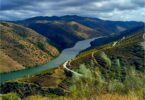
This mix creates a unique maritime climate, but it is the topography of the land itself that acts as the master sculptor. Protective mountain ranges sweep around the region, sheltering the vineyards from harsh inland weather systems while capturing the warmth of long, sun-drenched summers.
Yet, it is not just the sun that defines Marlborough; it is the interplay between the warmth of the day and the chill of the night. During the crucial summer ripening months, the region experiences a dramatic diurnal temperature range, often shifting by as much as 11 degrees Celsius between peak afternoon heat and midnight cool.
Winemakers point to this diurnal shift as the secret engine behind Marlborough’s success. As the days warm up, the grapes bask in generous sunshine, developing deep fruit flavors and aromatic complexity. But as the sun dips behind the mountains, temperatures plummet. This sharp drop halts the degradation of natural acids, preserving the crisp, electric freshness that serves as the backbone of the region’s wines. Ripening slows down, allowing the fruit to develop an intensity, precision, and varietal clarity that is unmistakably, defiantly Marlborough.

© Ph Malboroughwinenz
Lit by Kei Puta Te Wairau
Ask locals about the essence of the region, and they will often look upward. There is a palpable quality to the atmosphere here—a luminosity that visitors frequently remark upon before they can fully articulate it.
Marlborough sits beneath what local Māori poetically call Kei Puta Te Wairau—translated traditionally as “the hole in the cloud.” This unique meteorological phenomenon describes how weather systems breaking over the surrounding mountains often part overhead, bathing the valleys in an unusually high volume of brilliant, unhindered sunshine.
The light here is different. The air is sharper, carrying a crisp purity that reflects off the stony alluvial soils of the Wairau and Awatere valleys. It is an environment that feels simultaneously ancient and hyper-alive, a place where the elements—earth, mountain, sea, and sky—work in constant concert.

© Ph Malboroughwinenz
The Sauvignon Blanc Revolution
It was this precise environment that birthed modern New Zealand Sauvignon Blanc. When those pioneering vines were planted in 1973, the resulting wines introduced a flavor profile the world had never tasted before.
Up until that point, international Sauvignon Blanc was largely defined by the restrained, herbaceous, and mineral-driven styles of the Old World—specifically the Loire Valley and Bordeaux. Marlborough Sauvignon Blanc arrived like a burst of neon in a muted gallery. It was exuberant, exploding with aromas of freshly cut grass, passionfruit, zesty lime, and pungent boxwood, balanced by a razor-sharp acidity that cut clean across the palate.
It was pure, fresh, and, as time would prove, almost impossible to replicate anywhere else.
While attempts have been made across the globe to clone the Marlborough style, they routinely miss the mark. You can plant the same clones in similar soils elsewhere, but you cannot easily duplicate the exact alchemy of Marlborough’s maritime breezes, its glacial river stones, its dramatic diurnal swings, and Kei Puta Te Wairau.
The wine’s intensity and clarity earned it an immediate and enthusiastic place on the world stage. But capturing lightning in a bottle is one thing; keeping it there for half a century is quite another.
Guardians of the Land
The global success of Marlborough wine could easily have led to over-exploitation, industrialization, and a dilution of quality. Instead, the region’s growers and winemakers chose a different path—one rooted in stewardship, sustainability, and profound respect for the land.
From multi-generational family estates to forward-thinking corporate entities, the Marlborough wine community has long recognized that their fortunes are inextricably linked to the health of their soils and ecosystems. New Zealand pioneered one of the world’s most rigorous sustainability programs for viticulture, and Marlborough leads that charge. Today, the vast majority of the region’s vineyards operate under certified sustainable frameworks, with a rapidly growing movement toward organic and biodynamic farming.
Cover crops are planted between rows to encourage beneficial insects and prevent soil erosion; water usage is meticulously monitored and conserved in a region where glacial aquifers are lifeblood; and old-growth native plantings are being restored along riverbanks to maintain ecological corridors.
It is this ethos of care that has protected the integrity of Marlborough Sauvignon Blanc. The people who tend these vines understand that they are merely custodians of a landscape that took millions of years to form, and their job is to translate that landscape faithfully into the glass, vintage after vintage.

© Ph Malboroughwinenz
Beyond the Horizon
As Marlborough enters its second half-century, the region is no longer a one-trick pony—even if that pony is a thoroughbred.
While Sauvignon Blanc remains the undisputed flagship, accounting for the lion’s share of production, the past two decades have revealed a remarkable broader versatility. Exploratory winemakers have discovered that Marlborough’s diverse microclimates, ranging from the stony plains of the Wairau Valley to the dramatic, wind-swept slopes of the Awatere and the clay-heavy ridges of the Southern Valleys, are exceptionally well-suited to other varietals.
Marlborough Chardonnay is now routinely mentioned in the same breath as some of the finest Burgundies, offering a stunning tension between rich, stone-fruit generosity and steely, mineral acidity. Pinot Noir, cultivated carefully in the cooler, undulating contours of the Southern Valleys, yields wines of elegance, dark cherry fruit, and savory complexity. Riesling, Pinot Gris, and aromatic sparkling wines are also carving out vital spaces in the region’s portfolio.
Furthermore, winemaking techniques are evolving. Producers are increasingly experimenting with wild fermentations, old oak barrels, concrete eggs, and skin-contact macerations, peeling back the layers of Marlborough fruit to reveal deeper, more textural expressions of terroir.

© Ph Malboroughwinenz
A Story Still Being Written
Fifty years on from that first modest planting in the Brancott Valley, Marlborough stands as a titan of the global wine industry. Its bottles are uncorked in Michelin-starred restaurants in New York, casual bistros in London, beach bars in Sydney, and quiet dinner parties across the globe.
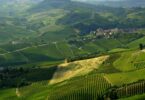
Yet, despite its global ubiquity, visiting Marlborough feels remarkably grounded. Drive down State Highway 1 or wind your way along the gravel roads of Rapaura, and you are met not by industrial complexes, but by a patchwork of green vineyards stretching out beneath vast, unobstructed skies. You see workers walking the rows, tasting grapes, and checking canopy health with the quiet concentration of craftspeople who know they are tending something precious.
The light still pours down through Kei Puta Te Wairau. The Pacific breezes still roll in off the water to chill the evening air. The mountains still stand sentinel.
Marlborough’s rise was swift, improbable, and historic, but for the people who call this unique slice of New Zealand home, the journey has only just begun. The next chapter is already ripening on the vine