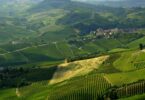



Vienna—a culturally rich metropolis of nearly two million people—is simultaneously a major European capital and a prominent, thriving wine region.
Today, Vienna is unique in the world for having substantial, commercial-grade vineyards within its city limits. But this status is no modern marketing gimmick; it is the result of a 2,000-year love affair between a city and its vines. The history of wine-growing in Vienna is, in many ways, the history of Vienna itself—a saga of Roman legions, medieval mortar, imperial decrees, near-fatal plagues, and modern preservation.
From Celtic Roots to Roman Legions
To trace the origins of Viennese wine is to navigate a charming debate between history books and traditional Viennese songs. Did Emperor Probus introduce wine to the region, or did viticulture exist long before the Roman eagles landed? As it turns out, both narratives hold grains of truth.
Long before the Romans marched into what is now Austria, Celtic tribes and Illyrians inhabited the area, harvesting wild grapevines and producing rudimentary wines from indigenous grapes. However, it was the Roman Empire that industrialized and refined the craft in the garrison town of Vindobona (modern-day Vienna).
The motivation, as is so often the case in history, was economic. Wine was a standard part of a Roman legionary’s salary. Transporting wine all the way from the Italian peninsula was staggeringly expensive and logistically nightmarish. To cut costs, Emperor Probus took matters into his own hands, importing grafted grapevines from Italy in the 3rd century AD and instructing his legions to cultivate them alongside the native Celtic vines. The experiment was a resounding success, laying a viticultural foundation that would outlive the empire itself.
Following the Roman era, wine-growing steadily expanded. Viticulture was practiced not just on the outer fringes of the settlement, but right in the bustling heart of the city center—near locations like Schottentor. Even today, echoes of this urban agricultural past linger; a small, functioning vineyard still operates proudly on Schwarzenbergplatz, tended by the prestigious winery “Mayer am Pfarrplatz.”
The Middle Ages: Sour Wine and Saintly Mortar
By the Middle Ages, as Vienna grew into a formidable walled city, commercial viticulture largely shifted to the suburbs and surrounding hillsides. Quality, however, was wildly inconsistent.
During the reign of Emperor Frederick III, local wine quality plummeted to such disastrous lows that the monarch temporarily prohibited drinking it, fearing it would sicken his subjects. This infamous brew was colloquially known as the “cask eater” (Fasslreisser) because it was supposedly so acidic that it could dissolve the wooden hoops holding wine casks together.
Throwing the undrinkable swill away was out of the question; wine was still widely regarded as a sacred “gift of god.” Instead, resourceful Viennese citizens found a remarkably pragmatic alternative use for the sour vintage: they used it to mix the mortar for the construction of Saint Stephen’s Cathedral. Miraculously, centuries later, the grand Gothic spire still stands tall, proving that “cask eater” wine did the stonework no lasting harm.
As the centuries progressed, the trade required regulation. Wine was sold out of modest cellars known as “holes” and in rudimentary taverns. In an attempt to improve flavor or stretch supplies, some unscrupulous tavern keepers resorted to mixing honey, saffron, or—more dangerously—harmful chemical adulterants into their stock. Wine adulteration laws were swiftly enacted, though enforcement was an ongoing challenge.
The Birth of the Heuriger
A defining turning point for Viennese wine culture arrived in the late 18th century, thanks to an enlightened imperial decree. In 1784, Emperor Joseph II issued a regulation that granted every citizen the right to sell and serve self-produced food, wine, and fruit juice.
This historic decree gave birth to the quintessential Viennese wine tavern, the Buschenschank or Heuriger. To this day, these rustic establishments—where vintners serve their own newly pressed wine alongside regional food—remain central to the city’s social fabric.
Discerning visitors can easily spot an authentic Viennese wine tavern by a simple, rustic tradition mandated by Joseph II’s legacy: a bundle of pine tree branches hung above the entrance. While modern Heurigen range from deeply traditional, family-run vineyards to upscale restaurant-type wine taverns (Heurigenrestaurants), that evergreen bundle remains an enduring symbol of authentic Viennese hospitality.
Surviving Ruin: Phylloxera and Modern Revival
Like much of European viticulture, Vienna’s wine sector faced an existential crisis in the 19th century. The arrival of phylloxera—a devastating root-eating aphid accidentally imported from North America—wiped out almost the entire stock of European grapevines.
Rescue came in the form of Baron Babo, who founded a pioneering viticulture school in nearby Klosterneuburg. By importing American rootstock that was naturally resistant to the pest, Babo helped replant the region, kicking off a modern era of winemaking.
A second, more subtle recession threatened Viennese vineyards in the 1980s, driven by shifting consumer habits and urban expansion. Fortunately, proactive leadership stepped in. Former Vice-Mayor Hans Mayr and Franz Mayer, President of the Vienna Agricultural Chamber, spearheaded a massive revitalization project. Vineyards were replanted, historical wine taverns were championed, and the City of Vienna implemented targeted protection measures, legally declaring vineyards as specially protected areas.
These policies preserved a green, agriculturally active cultural landscape that wraps around the metropolis, giving a unique boost to both local agriculture and international tourism.
Today, viticulture is a vital thread in Vienna’s cultural identity and a meaningful economic engine. Approximately 700 hectares of the city’s surface area are dedicated to vineyards. Microclimatically blessed by the Danube River and the sheltering canopy of the Vienna Woods, about 170 vintners cultivate roughly 400 individual vineyards, primarily clustered around the picturesque northern and western districts of Kahlenberg, Nussberg, Bisamberg, and Mauer.
White wine dominates the Viennese landscape, accounting for roughly 80 percent of production, while red wine makes up the remaining 20 percent. Flagship white varieties include Grüner Veltliner, Rheinriesling, Weißburgunder, Chardonnay, and Welschriesling, alongside robust reds like Blauer Zweigelt, Blauer Burgunder, Merlot, and Cabernet Sauvignon. On average, the city yields about 20,000 hectolitres of wine annually, the vast majority of which is consumed fresh and locally, flowing freely in the city’s beloved Heurigen.
No discussion of Viennese wine is complete without mentioning its most famous vinicultural treasure: the Wiener Gemischter Satz. This traditional style involves planting two or more different grape varieties together in a single vineyard. The grapes are harvested simultaneously and vinified together in the same tank. Far from a random blend, Gemischter Satz creates a complex, harmonious wine that reflects the soil and microclimate of the specific vineyard. Its excellence has earned it prestigious DAC (Districtus Austriae Controllatus) status, cementing Vienna’s reputation among wine connoisseurs worldwide.