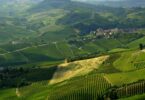



If you mention Napa Valley to any wine lover, certain images instantly come to mind: sun-drenched valley floors, rows of impeccably manicured vines basking in relentless heat, and opulent tasting rooms filled with the bold, jammy Cabernets that put California on the global wine map. It is a legendary landscape, world-renowned and heavily trafficked.
Yet, just a stone’s throw east of downtown Napa lies a completely different world.
Welcome to Coombsville, Napa Valley’s 16th AVA. Spanning roughly 11,000 acres, this hidden gem feels worlds away from the bustling Highway 29 corridor. Here, only about 13 percent of the land is planted to vineyards. It is a place where nature still dictates the pace of life, and where the prevailing ethos is one of quiet craftsmanship rather than industrial-scale production.
To understand Coombsville is to understand a geological and meteorological anomaly. While much of Napa bakes in the afternoon sun, Coombsville keeps its cool. Positioned near the mouth of the San Pablo Bay, the region is heavily influenced by marine air. Morning fog blankets the landscape, brisk afternoon breezes sweep through the hills, and temperatures remain consistently moderate.
This maritime embrace creates a significantly longer growing season. Grapes here linger on the vine much later into the autumn, developing a complex interplay of concentrated, nuanced fruit flavors, vibrant acidity, and remarkable structural elegance.
Furthermore, Coombsville is not a monolith; it is a patchwork quilt of distinct microclimates, varied topography, and unique soils. No two vineyards are alike. Because of this rich diversity, the more than 70 vineyards scattered throughout the region lean heavily into bespoke, small-batch, terroir-driven winemaking. Every bottle tells a hyper-local story of the specific pocket of earth from which it came.
Yet, this tranquil sanctuary of wine has a surprisingly storied past, one defined by ambitious pioneers, abrupt heartbreak, and a healthy dose of stubborn passion.

© Coombsvillenapa
The human history of the area stretches back to 1846, when a California pioneer named Nathan Coombs acquired a parcel of land and ultimately founded the city of Napa. Decades later, during the late 1880s, European immigrants recognized the agricultural potential of the hillsides just east of the growing town. Visionaries like Italy’s Antonio Carbone and Germany’s Henry Hagen established early wineries here. Hagen’s wines were so revered that they were famously poured at the prestigious San Francisco Opera House, putting early notice on the region’s potential for greatness.
Alas, this burgeoning golden age was cut tragically short. Prohibition swept across the nation like a ghost, abruptly shuttering the fledgling wineries and leaving the hillsides to sleep.
It wasn’t until the late 1960s that agriculture truly returned to Coombsville. At the time, conventional wisdom dictated that the region’s cool, fog-laden climate was best suited exclusively for delicate cool-climate varieties like Pinot Noir and Chardonnay. The historic Haynes Vineyard, planted to Chardonnay in 1967, stands as a testament to that era.
Then came Frank Farella. In the late 1970s, against the collective advice of his viticultural colleagues who warned him the area was too cold, Farella boldly planted Cabernet Sauvignon and Merlot.
It turned out Farella’s gamble was a masterstroke. The resulting fruit was nothing short of extraordinary. Before long, Napa Valley’s star vintners were quietly beating a path to Coombsville’s door, buying up its coveted fruit to blend into their own award-winning, iconic bottles. Coombsville was quietly acting as the secret weapon behind some of Napa’s most celebrated labels.
For decades, the region operated as an insider’s secret. But communities rooted in the soil eventually seek to protect and define themselves. The turning point for modern Coombsville began around a kitchen table.
In 2009, a group of neighbors and friends—winemakers and growers who shared a deep affection for the land—gathered for an informal Christmas party. Everyone brought something special from their cellars to taste. More than 20 people turned out for the gathering, and over glasses of wine, a shared realization crystallized: they needed to band together.
That casual holiday party gave birth to the Coombsville Vintners and Growers Association (CVG). Founded by luminaries including Tom Farella (Farella Vineyard), Tracey Reichow (Blackcat Vineyard), Tim Porter (Porter Family Vineyards), Ken Bernards (Ancien Wines), Rebecca Sciandri Griffin (Sciandri Family Vineyards), and Kari DiFabrio (Sodaro Estate Winery), the CVG was established with a singular mission: to promote and fiercely preserve the unique character of their region.
Their efforts bore sweet fruit in 2011, when the area was officially granted American Viticultural Area (AVA) status, finally receiving the formal recognition its distinctive terroir had long deserved.

© Coombsvillenapa
Today, Coombsville is a thriving, tight-knit community of passionate vintners and grape growers. They are custodians of a rich history, honoring the pioneers of the 19th century and the rebellious planters of the 1970s, while boldly looking toward a bright, sustainable future.
To visit Coombsville today is to step away from the commercialized rush of modern wine tourism. It is to drive down winding country lanes, past sleeping oak trees and misty hillsides, and to meet winemakers who know every vine by name. Coombsville remains Napa’s most gracious, nuanced, and captivating secret.