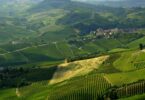



Bathed in 300 days of sunshine a year and cradled by a mild, alpine-Mediterranean climate, the landscape stretching along the Alto Adige Wine Road is far more than a picturesque holiday destination. It is a breathing viticultural masterpiece. Spanning 4,400 hectares, this ribbon of green is the largest contiguous wine-growing area in the region, creating a mosaic where dramatic jagged peaks meet sun-drenched vineyards, and where ancient winemaking traditions seamlessly blend with modern, world-class craftsmanship.
A Complex Mosaic of Microclimates and Terroir
To understand the Alto Adige Wine Road is to understand a study in contrasts. Stretching from Bolzano through Nalles down to Salorno, the region forms an intricate topographical puzzle. Vineyards are planted at altitudes ranging from 200 to 1,000 meters above sea level, placing an astonishing range of microclimates and diverse soils at the disposal of local winemakers.
A traveler driving along the route is greeted by a cinematic panorama: lush vineyards carpeting the valley floor, climbing sun-kissed Mediterranean hillsides, and abruptly finding themselves anchored against the dramatic, towering backdrop of high mountain summits. Because the Mediterranean spring arrives exceptionally early here, visitors can comfortably explore South Tyrol as early as March, enjoying pleasant temperatures amidst blossoming vines and soaring cypresses.
This geographic diversity translates directly into the glass. The soils vary wildly with elevation and location. The autochthonous red variety Lagrein typically thrives on warm gravel and sandy soils around its home city of Bolzano. Meanwhile, the aromatic white variety Gewürztraminer matures beautifully on calcareous soils. Unique on a global scale are the stony soils of Dolomite limestone found along the southern edge of the Wine Road. Derived directly from the neighboring UNESCO World Natural Heritage site of the Dolomites, these highly water-permeable, mineral-rich soils impart a distinct character to the region’s celebrated white wines.

© Ph. Suedtiroler weinstrasse
Deep Roots: Centuries of Winemaking Heritage
Alto Adige’s wine culture is proudly among the oldest in Europe, a fact anchored in tangible history. Archaeological discoveries of vine knives and scoops dating back to the 5th century provide undeniable proof of ancient cultivation.
When the Romans marched into modern-day Alto Adige in 15 BC, they were utterly astonished by what they found: the indigenous Rhaetian population was already storing and aging wine in wooden barrels—an advanced technique at a time when the court of Emperor Augustus in Rome was still relying on primitive leather tubes and clay amphorae.
As centuries progressed, the region’s vinous reputation only expanded. From the 8th century onward, Bavarian and Swabian convents eagerly acquired wine farms in Alto Adige to guarantee a steady supply for their own religious houses. By the 13th century, local wines such as the “Potzner” and the “Traminer” became among the first in Europe to be officially named after their specific geographical places of origin.
So central was wine to the local identity that it began inspiring artists and poets. It was immortalized in a medieval fresco inside the Bressanone Cathedral and captured in the verses of the famed Minnesinger poet Oswald von Wolkenstein. Later, under the rule of the Habsburg Monarchy, viticulture received another strong push forward, introducing classic noble varieties like Riesling and Burgundy grapes to local soils.
While deeply traditional, the Alto Adige wine sector is anything but stagnant. Since 1980, the region has undergone a remarkable transformation characterized by explosive quality growth.
This modern renaissance was driven by a decisive shift: wine growing was strictly tied to optimal vineyard locations, harvest yields were drastically reduced to concentrate flavors, and cutting-edge winemaking technologies were embraced. The results speak volumes. Today, an astonishing 98.8 percent of all wine-growing areas in Alto Adige proudly bear the prestigious DOC (Denominazione di Origine Controllata) protection label, placing the region firmly at the absolute forefront of Italian viticulture.
The Stars of the Cellar: Autochthonous and International Vines
The variety of vines cultivated along the Alto Adige Wine Road is staggering. Alongside internationally renowned heavyweights like Pinot Blanc and Pinot Noir, the region’s native and local grapes continue to set the pulses of wine enthusiasts racing across the globe.
Gewürztraminer
Long a staple of the region, Gewürztraminer is officially classified as a “local” variety rather than strictly autochthonous, yet it remains one of the most heavily demanded wines to emerge from South Tyrol. Known locally as Südtiroler Gewürztraminer, it is an intensely aromatic wine that seduces the senses. Its unmistakable bouquet features rich, expressive notes of fresh roses, sweet cloves, exotic lychee, and tropical fruits, delivering a deeply layered tasting experience.
Vernatsch
Vernatsch has anchored the Alto Adige wine sector since the 16th century and remains the most widely planted vine in the region. Its spiritual home is the Oltradige region along the Wine Road, where it is famously bottled as Kalterersee (Lake Caldaro wine).
Other notable DOC expressions include Südtirol St. Magdalener (cultivated in and around Bolzano), Südtirol Bozner Leiten, and Südtirol Grauvernatsch. Depending on the specific microclimate and sub-region, Vernatsch delivers a distinct, charming fruit and almond aroma, characterized by a light, approachable body that makes it an exceptionally versatile food companion.
Lagrein
Alongside Pinot Noir and Vernatsch, Lagrein stands proudly as one of the definitive red wine flagships of Alto Adige. Originating in Bolzano, Südtirol Lagrein is instantly recognizable by its deep, dark garnet-red color.
On the nose, it offers an alluring tapestry of wild berries, dark cherries, and Parma violets. On the palate, it rewards the drinker with a velvety, full body backed by a refreshingly soft acidity. For warmer months, the grape is also crafted into a refreshing rosé version known traditionally as Lagrein Kretzer.
A Destination for All Senses
To travel the Alto Adige Wine Road is to experience a rare harmony between nature, history, and human passion.
Between the rugged, majestic wall of the Dolomites and the gentle, swaying cypresses of the valley, Alto Adige proves that great wine is truly born of place—a timeless marriage of high-altitude terroir, centuries of heritage, and an unyielding commitment to excellence.