


Long before it became an officially recognized American Viticultural Area (AVA), the steep, winding foothills of the Mayacamas Mountains in northeastern Santa Rosa were home to utopian dreamers, exiled nobility, and California’s very first “cult winery.”
Today, the Fountaingrove District is celebrated as one of Sonoma County’s most distinct and compelling wine regions. Yet, despite producing ultra-premium grapes that rival its more famous neighbors, this 38,000-acre appellation remains a quiet sleeper—achieving AVA status in March 2015 without the bombast or controversy that often accompanies modern wine country politics.
Instead, Fountaingrove prefers to let its complex wines, rugged topography, and colorful past do the talking.
A History Etched in Cults and Kings
To understand the character of Fountaingrove, one must look back past the rows of Cabernet Sauvignon and Syrah to the late 19th century. The district takes its name from the historic Fountaingrove estate, founded by Thomas Lake Harris, a charismatic and self-proclaimed immortal leader of a utopian religious sect known as the Brotherhood of the New Life.
Among Harris’s devoted followers was a young Japanese aristocrat named Kanaye Nagasawa. Gifted in business and viticulture, Nagasawa eventually took over the winemaking operations at Fountaingrove. Under his visionary stewardship, the estate expanded dramatically, shipping award-winning wines around the globe and earning Nagasawa the affectionate and permanent moniker, the “Wine King of California” (or Baron Nagasawa).
Though the utopian commune eventually dissolved and time swept away the original buildings, Nagasawa’s legacy of excellence and innovation laid a permanent cultural foundation for the region—cementing Fountaingrove’s status as California’s original, albeit unorthodox, cult winery.
The Geography of a Hidden Gem
Tucked inland from the Pacific Ocean along the western slopes of the Mayacamas, the Fountaingrove District forms a vital geographic bridge. It links the Chalk Hill and Knights Valley AVAs to the north with the Sonoma Valley to the south, the Russian River Valley to the west, and Napa Valley icons like Diamond Mountain and Spring Mountain to the east.
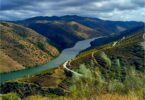
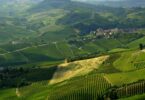
Yet Fountaingrove possesses a topography entirely its own. The landscape is a breathtaking mosaic of forested hillsides, rugged passes, and sun-drenched clearings. Most vineyards sit perched at elevations ranging from 400 to 2,000 feet.
This dramatic elevation is complemented by ancient terroir born over three million years ago from the volcanic eruptions of Mount St. Helena. The resulting well-drained “Sonoma Volcanics” soils force vines to struggle, driving their roots deep into the earth in search of nutrients and water. This struggle is the secret behind the region’s exceptionally complex, age-worthy wines.
Despite sitting inland, Fountaingrove enjoys a moderate climate shaped by a unique interplay of elements. Cool maritime breezes funnel inland through Santa Rosa, sweeping across the hillsides to temper the afternoon heat. This cooling effect allows grapes like Cabernet Sauvignon and Syrah to develop deep, refined flavor profiles while maintaining balanced, lower alcohol levels. Meanwhile, diverse hillside microclimates—including cooler, north-facing slopes—allow varieties like Chardonnay and Pinot Noir to thrive.

© Fountain Grove Ava
A Labor of Love: Small Scale, High Integrity
While the Fountaingrove District spans 38,000 acres, only about 600 acres are currently under vine. This scarcity is a feature, not a bug, protecting the region’s intimate, artisanal scale.
Vineyards in the appellation are remarkably small, ranging from micro-plots of under an acre to larger estates of 57 acres, with a median size of just 12 acres. The vast majority of these vineyards are fiercely independent and family-owned. In many cases, these small farmers handle the grueling harvest work themselves, pouring their blood, sweat, and tears into cultivating ultra-premium fruit for both their own boutique labels and prestigious winery partners across Sonoma and Napa.
This hands-on approach breeds a profound commitment to sustainability. The district’s family growers operate under the shared belief that every decision made in the vineyard—from cover cropping to water management—directly impacts not only the quality of the fruit in the glass, but the long-term health of the surrounding ecosystem.

© Fountain Grove Ava
The Varietal Spectrum
While Cabernet Sauvignon reigns supreme as the district’s flagship varietal, the breadth of Fountaingrove’s portfolio is a testament to its varied terroir.
Bordeaux varieties—including Cabernet Franc and Merlot—flourish in the volcanic, well-drained soils, producing structured, elegant red wines with remarkable aging potential. At the same time, the region has cultivated a strong reputation for Rhône varieties, most notably Syrah, Viognier, and Petite Sirah, which thrive in the sun-drenched hillside exposures. In select, cooler microclimates, Zinfandel, Chardonnay, and Sauvignon Blanc also excel, offering crisp acidity and vibrant fruit characteristics.
As Sonoma County continues to evolve, the Fountaingrove District remains a place where past and present effortlessly collide. It is a land where the ghost of a Japanese samurai-turned-winemaker still echoes through the hills, and where multi-generational family farmers quietly tend to some of the most coveted vines in the state.